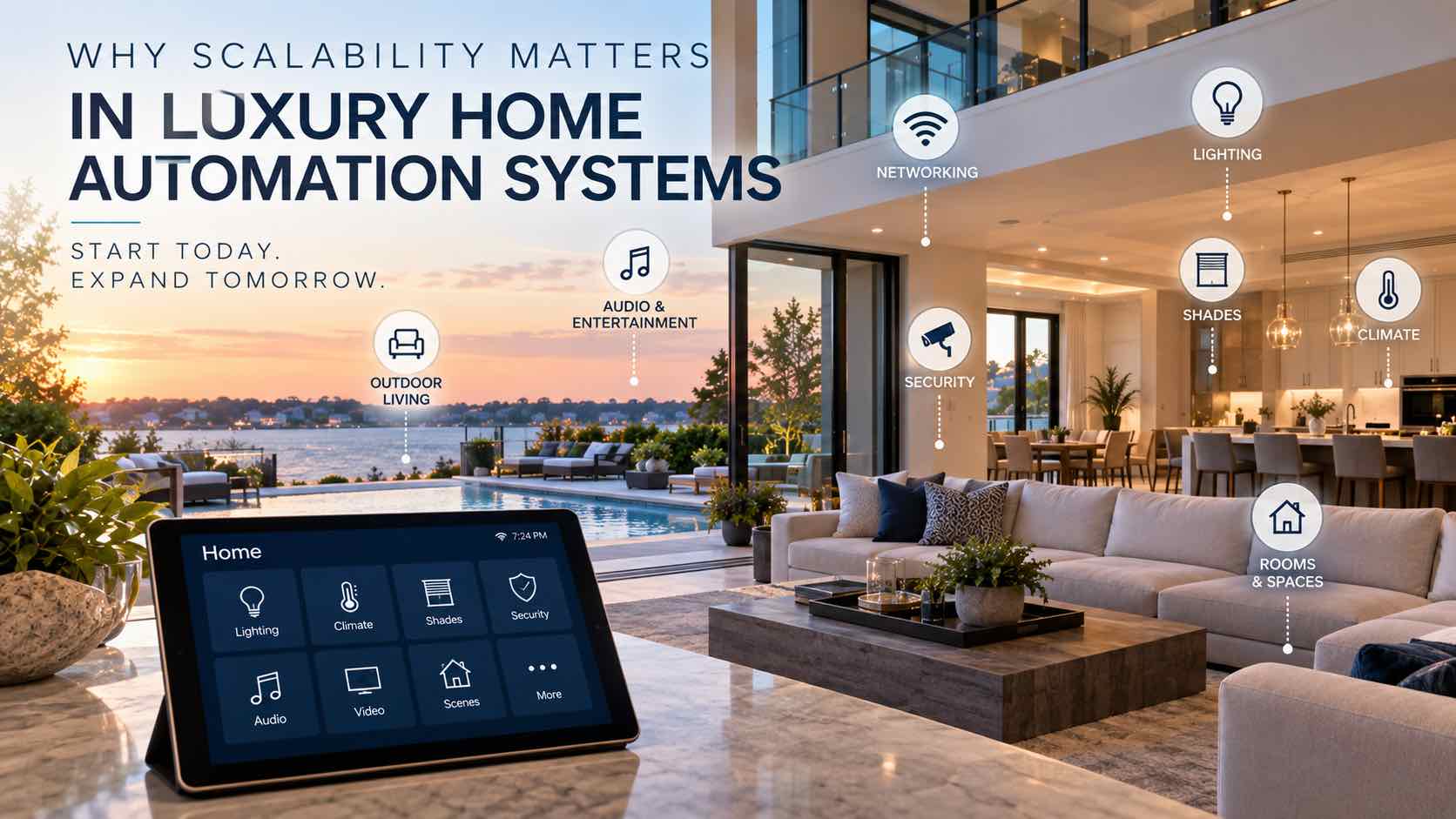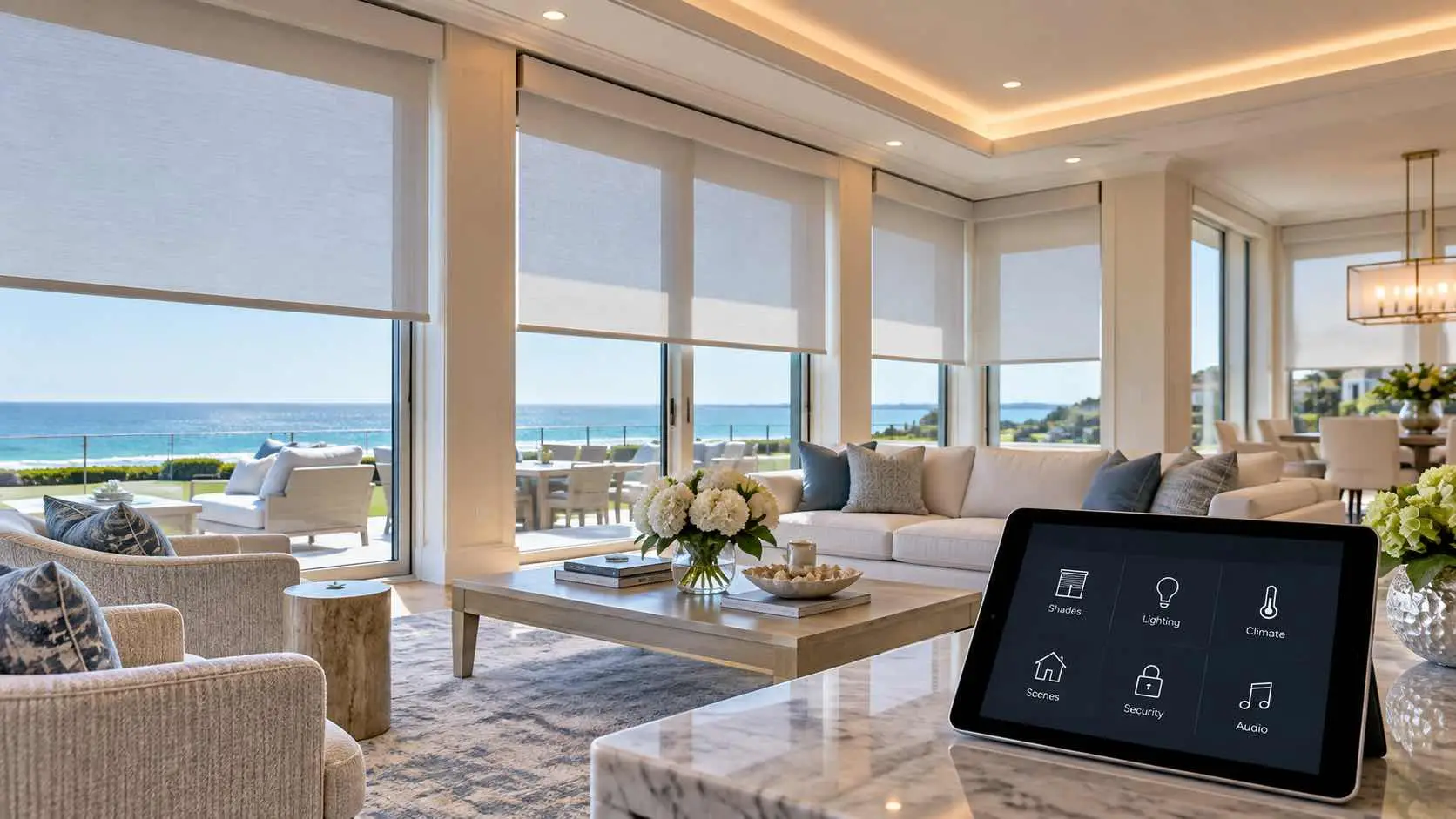
A luxury home automation system should not be designed only around what you want today. Your home, lifestyle, and technology needs are likely to change over time.
You may start with automated lighting, climate control, and a strong home network. Later, you may want to add whole home audio, motorized shades, security cameras, a home theater, outdoor entertainment, or automation in additional rooms.
A scalable home automation system gives you the flexibility to make those changes without unnecessarily starting over.
For homeowners building or upgrading a luxury home in New Jersey, scalability should be part of the technology conversation from the beginning.
What Does Scalability Mean in Home Automation?
A scalable home automation system is designed so it can grow as your needs change.
Instead of treating every technology decision as a standalone project, your home automation consultant develops a larger plan for how lighting, networking, audio and video, security, climate, shades, and other systems can work together.
You may not install every feature during the first phase.
The important thing is making sure today’s decisions do not unnecessarily limit tomorrow’s options.
You Don’t Have to Automate Everything at Once
One misconception about luxury home automation is that the entire house needs to be automated during a single project.
That is not always necessary.
A professionally designed system can be implemented in phases.
Start With the Foundation
The first phase may concentrate on the systems that provide the foundation for future technology.
This can include:
- Enterprise grade networking
- Enhanced WiFi
- Structured wiring
- Core automation controls
- Lighting control
- Equipment locations
- Security infrastructure
Once that foundation is established, additional technology can be incorporated as your needs and priorities change.
Add More Rooms Over Time
Perhaps you initially want automation in the primary living areas of your home.
The kitchen, family room, home office, and primary bedroom may be the first spaces you want connected.
Later, you may decide to expand into guest rooms, a finished basement, gym, home theater, outdoor areas, or other parts of the property.
A scalable system should make it possible to bring these spaces into the larger automation environment without creating a completely separate technology ecosystem.
Expand Your Whole House Lighting Control
Lighting is often one of the first systems homeowners choose to automate.
You may initially focus on frequently used areas such as the kitchen, living room, dining room, and exterior.
Over time, lighting control can expand into bedrooms, hallways, entertainment spaces, landscape lighting, and other areas.
The same automation scenes can evolve as the system grows.
An Entertain scene that originally adjusted lighting in the kitchen and living room might eventually coordinate lighting, shades, music, climate, and outdoor spaces.
Add Whole Home Audio When You’re Ready
Whole home audio is another technology that can benefit from scalable planning.
You may begin with music in a kitchen, family room, and patio.
Later, you might want audio in bedrooms, a home office, gym, pool area, or throughout the entire property.
Planning speaker wiring, equipment capacity, network infrastructure, and control during the initial design can make future expansion easier.
Build Entertainment Around Your Lifestyle
Your entertainment needs can change significantly over time.
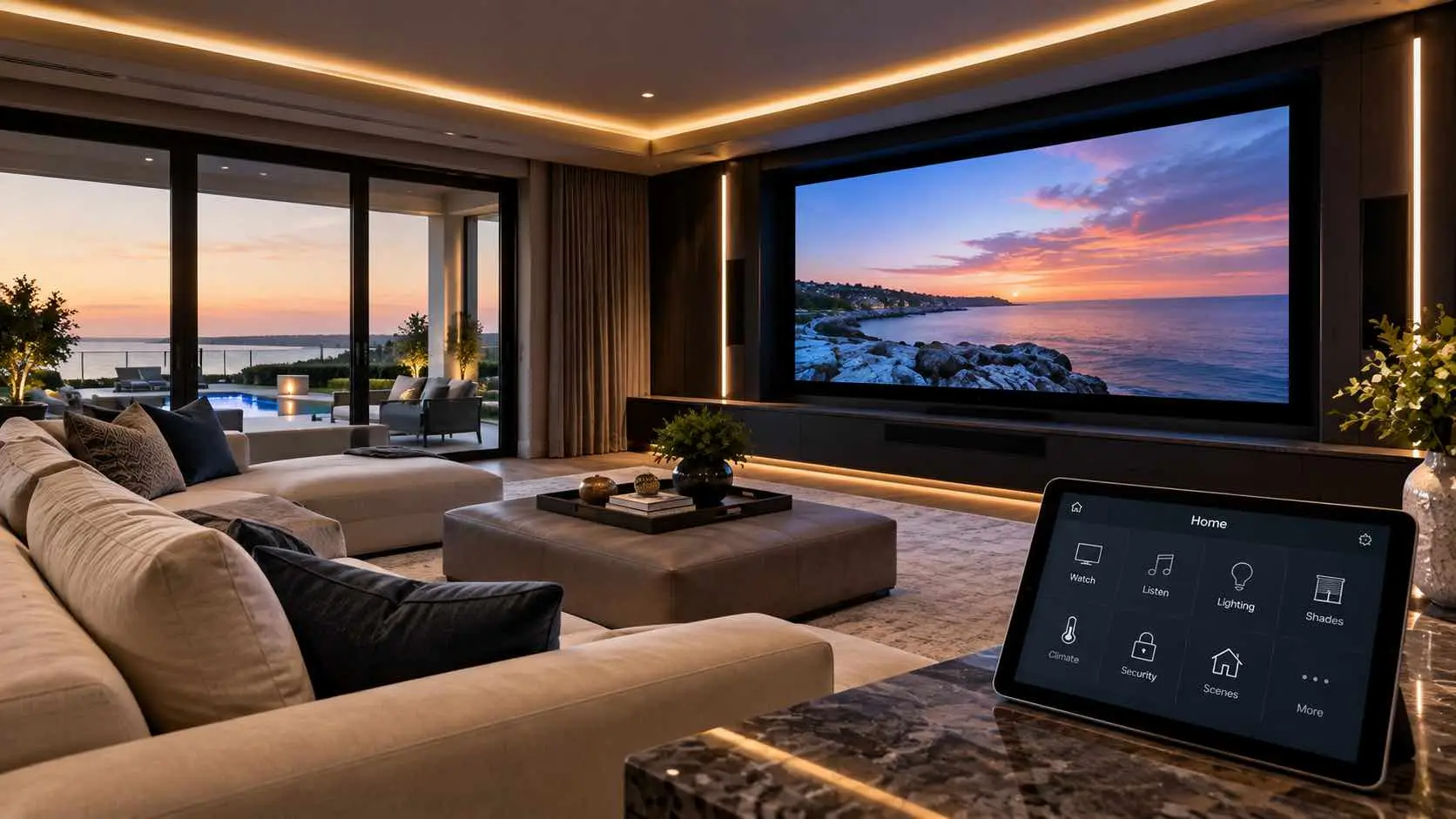
A simple family room television may eventually be joined by a dedicated home theater, sports viewing room, golf simulator, gaming room, or outdoor entertainment system.
A scalable technology plan considers these possibilities even if they are not part of the initial installation.
This does not mean purchasing equipment years before you need it. It means avoiding unnecessary limitations in the infrastructure that will support it.
Expand Security as Your Needs Change
Security requirements can also evolve.
A homeowner may begin with cameras around primary entrances and later want additional coverage around the driveway, backyard, pool, detached garage, gate, or other areas of the property.
Access control and other security technology can also become part of the larger system.
When networking, wiring, and automation are designed with expansion in mind, adding these capabilities can be much more straightforward.
Don’t Forget Outdoor Living
Luxury home automation increasingly extends beyond the walls of the house.
Pools, patios, outdoor kitchens, cabanas, sports areas, landscape lighting, and entertainment spaces may eventually need technology.
Your outdoor environment could incorporate:
- Landscape audio
- Outdoor televisions
- WiFi
- Lighting control
- Security cameras
- Pool area technology
- Automated scenes
A scalable system allows these spaces to become part of the same connected experience.
Your Network Must Be Able to Grow Too
Every additional connected system places demands on the network.
A home that begins with smartphones, computers, and a few televisions can eventually include dozens of connected devices, cameras, automation processors, streaming systems, access points, audio equipment, and other technology.
That is why the network should not be an afterthought.
Plan Capacity, Not Just Coverage
Good network design is not only about getting a WiFi signal into every room. The system should also be designed to support the number and types of devices expected to use it. Wired connections, wireless access points, network switches, equipment locations, and other infrastructure should be considered as part of the home’s long-term technology plan.
Leave Room in Your Equipment Infrastructure
Scalability also applies to the physical equipment supporting your smart home.
If the technology rack, network switch, wiring pathways, or equipment locations are already at capacity when the initial installation is completed, future upgrades may become unnecessarily complicated.
A well-designed system can allow reasonable space for expansion.
The objective is not to install equipment you do not need. It is to avoid designing the infrastructure with nowhere to go next.
Avoid a Collection of Unrelated Smart Devices
Adding individual smart products one at a time may seem like an easy way to expand your home.
Over time, however, homeowners can end up with numerous apps, interfaces, and devices that were never designed to operate as one system.
Luxury home automation takes a different approach.
The objective is to create a technology ecosystem where compatible systems can work together through a consistent control experience.
As the home grows, new technology becomes part of that larger environment rather than another isolated system.
Your Automation Scenes Can Grow With the System
One of the most useful aspects of an integrated home is the ability to coordinate multiple systems through customized scenes.
Initially, a Good Night scene might simply turn off selected lights and adjust the temperature.
As the system expands, that same command could also lower shades, adjust additional lighting, change entertainment settings, and incorporate other connected systems.
The homeowner does not necessarily need more complexity as more technology is added.
In a properly designed system, greater integration can actually make the home easier to operate.
Scalability Is Especially Important in New Construction
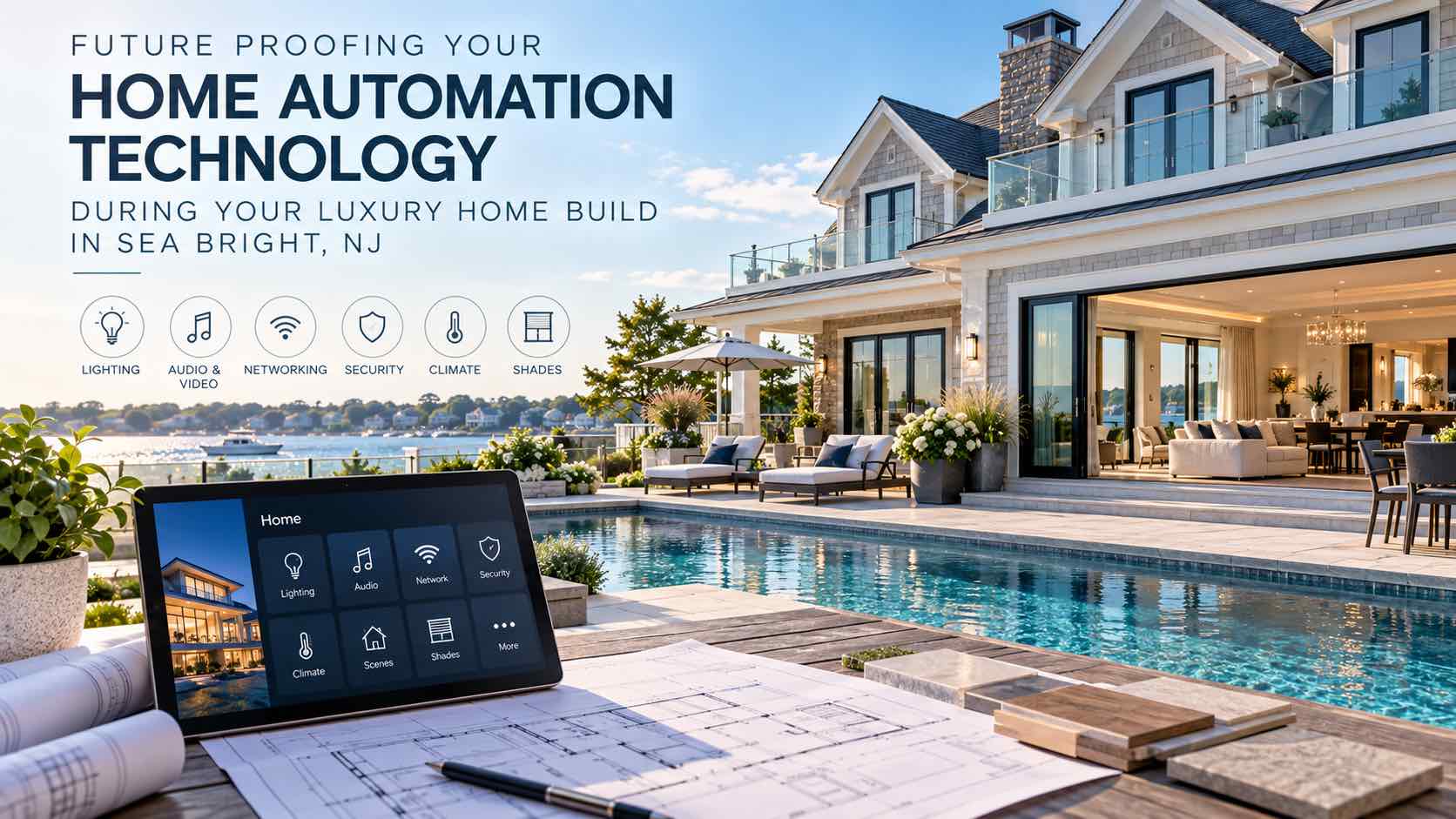
When building a luxury home, you have a unique opportunity to prepare for future technology before walls and ceilings are completed.
Structured wiring, equipment rooms, network connections, speaker locations, shade power, security infrastructure, and other systems can be considered during construction.
You may choose not to activate every feature immediately.
But providing the right foundation can make it easier to expand when you are ready.
Existing Luxury Homes Can Be Scalable Too
Scalability is not limited to new construction.
An existing home automation system can often be evaluated and upgraded with future growth in mind.
GMI Automation can review the existing network, wiring, equipment, controls, and connected systems to determine what can remain and where improvements may be needed.
The next upgrade can then become the beginning of a longer-term technology plan instead of another isolated project.
Plan for Your Lifestyle, Not Just Today’s Technology
Technology will continue to change. Trying to predict which specific devices will be popular years from now is difficult and usually unnecessary. Instead, focus on creating a strong foundation. Reliable networking, thoughtful wiring, accessible equipment, flexible control, and a professionally planned automation system