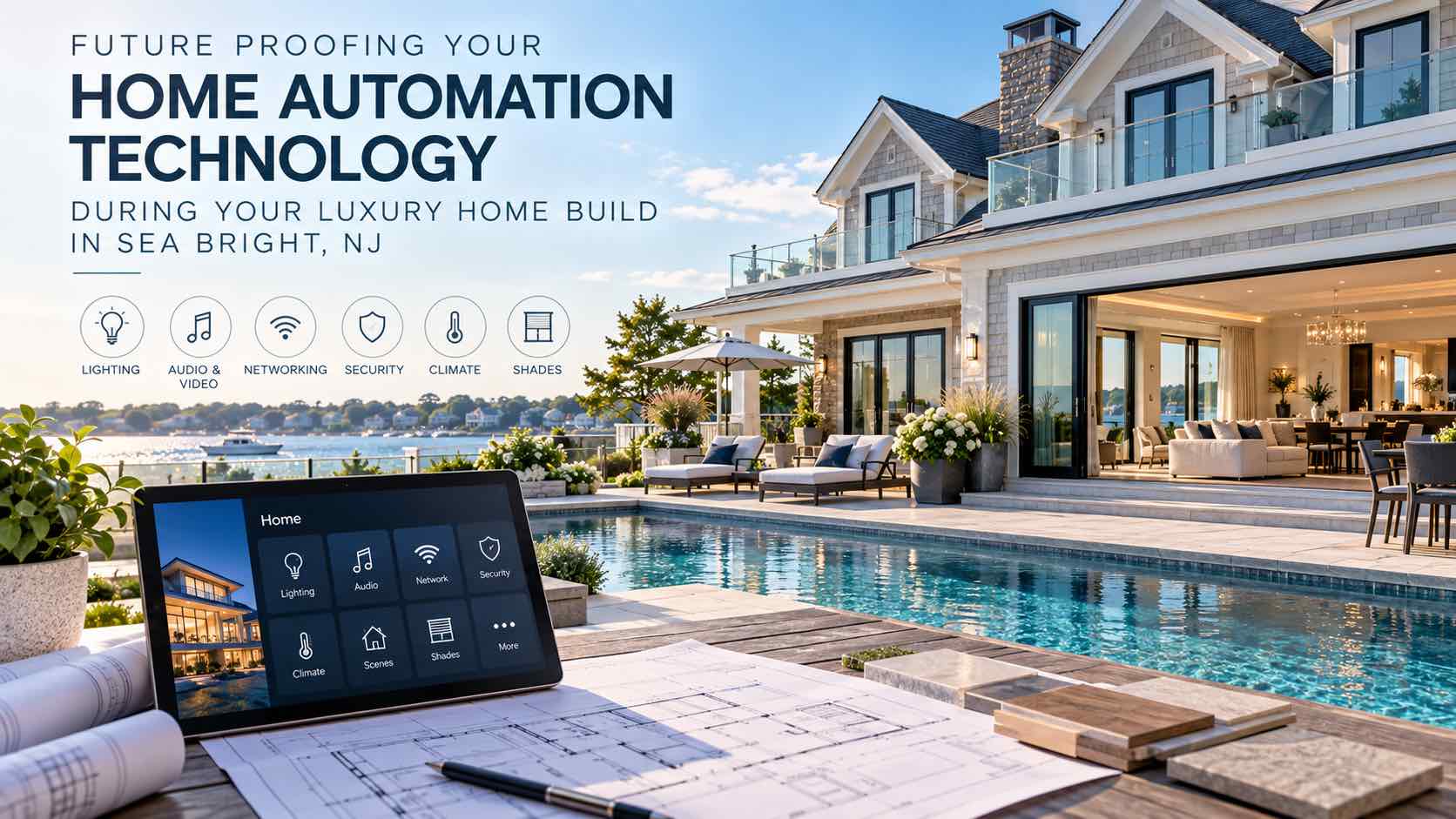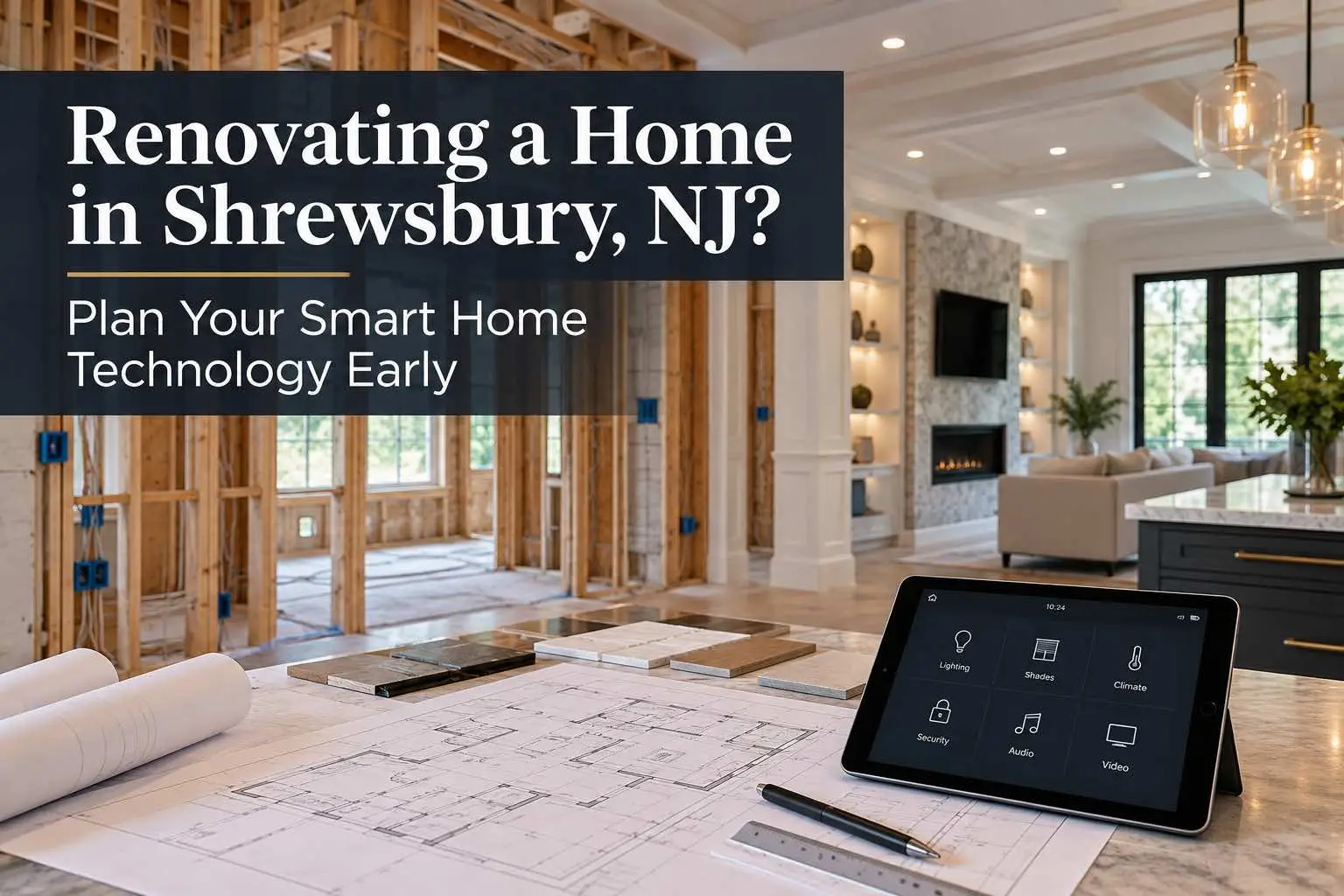
Building a luxury home in Sea Bright, NJ gives you an opportunity that homeowners renovating an existing property rarely have: the ability to plan your technology infrastructure before the walls and ceilings are finished.
That opportunity should not be overlooked.
Home automation technology will continue to change, and the systems you want five or ten years from now may be different from what you need today. Future proofing your new home does not mean trying to predict every new product that will become available. It means creating the infrastructure, network, wiring, equipment locations, and system design that give your home room to evolve.
By involving a home automation consultant early in your Sea Bright home build, you can create a technology foundation that supports your needs today while making future expansion considerably easier.
Start Technology Planning Before the Walls Go Up
Many of the most important parts of a luxury home automation system are the things you eventually never see.
Behind finished walls and ceilings may be network cabling, speaker wiring, control wiring, security infrastructure, connections for televisions, motorized shade wiring, and other low voltage systems.
Once drywall, custom millwork, stone, tile, and other finishes are installed, adding new infrastructure becomes more complicated.
That is why technology planning should begin during the design and construction process rather than shortly before move-in.
Future Proofing Is About Infrastructure
It can be tempting to think about future proofing in terms of purchasing the newest equipment available.
Technology changes too quickly for that approach to work.
Displays will change. Streaming devices will change. Automation platforms will evolve. New connected products will become available.
The underlying infrastructure can have a much longer useful life.
A well-planned luxury home should provide pathways and connectivity that allow equipment to be upgraded without unnecessarily rebuilding the technology infrastructure every time something changes.
Build a Strong Home Network From the Beginning
The network is one of the most important systems in a modern luxury home.
Home automation, streaming, security cameras, audio and video, mobile devices, televisions, home offices, climate systems, and other connected technologies can all depend on it.
A standard wireless router is rarely the ideal foundation for a large, technology-rich property.
Plan WiFi Coverage Throughout the Property
Wireless access points should be planned around the home’s layout rather than added after construction wherever a signal happens to be weak.
Coverage may be needed throughout:
- Bedrooms and living areas
- Kitchens
- Home offices
- Home theaters and media rooms
- Garages
- Upper and lower levels
- Rooftop or deck areas
- Patios
- Pools and outdoor living spaces
For a Sea Bright property, the technology plan should consider how you expect to use the entire home, not simply where the internet service enters the building.
Use Wired Connections Where They Make Sense
Future proofing a home does not mean making everything wireless.
In fact, a scalable luxury home should generally use a combination of wired and wireless connectivity.
Permanent equipment such as televisions, network hardware, automation components, security equipment, and other fixed devices can benefit from wired connections where appropriate.
This can provide reliable connectivity while preserving wireless capacity for smartphones, tablets, laptops, and other devices that actually need mobility.
Think Beyond the Technology You Want Today
One of the most important questions during a luxury home build is not simply, “What technology do we want?”
It is also, “What might we want later?”
Perhaps you do not want whole home audio in every room today. You may decide to add it later.
Maybe a future outdoor entertainment system, additional cameras, motorized shades, a golf simulator, home theater, expanded lighting control, or new automation features are not part of the initial construction budget.
Planning for those possibilities now can make them easier to add in the future.
Build Your Home Automation System in Phases
You do not necessarily have to install every possible smart home feature when you build your Sea Bright home.
A well-designed system can provide a foundation that allows technology to be added over time.
Phase One: Build the Foundation
The initial phase may concentrate on essential infrastructure such as networking, WiFi, structured wiring, equipment locations, security infrastructure, and the core automation platform.
Phase Two: Expand Everyday Automation
Additional systems can incorporate whole house lighting control, motorized shades, climate integration, audio and video, and more advanced automation scenes.
Phase Three: Add Lifestyle Technology
As your needs change, the home can expand to include outdoor entertainment, additional media spaces, advanced security, home theaters, recreational technology, and other features.
The important part is ensuring that each phase is part of a larger technology plan.
Plan Whole House Lighting Control Early
Lighting control is much easier to incorporate when it is considered alongside the home’s electrical design.
Instead of approaching lighting automation after conventional switching has already been finalized, your home automation consultant and electrician can coordinate the system during construction.
This can provide greater flexibility for centralized lighting control, architectural keypads, customized scenes, and integration with other technology.
Think in Scenes Instead of Individual Switches
An integrated system allows lighting to respond to how you use the home.
You might have scenes for Morning, Entertain, Dinner, Movie, Good Night, Away, or Arrival.
As additional technology is added in the future, those scenes can evolve to include shades, climate, audio, security, and other systems.
Prepare for Motorized Shades
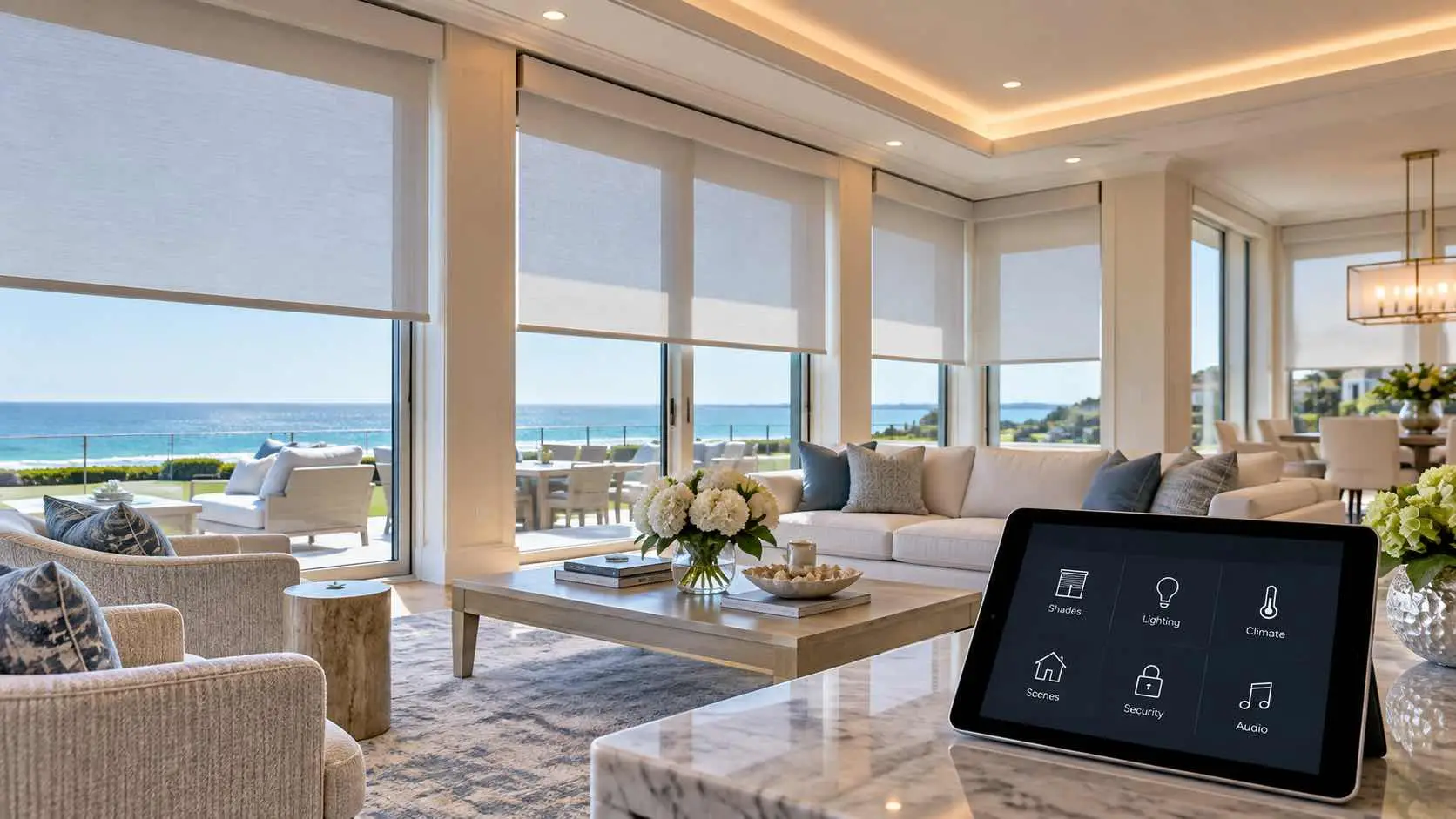
Motorized shades are another technology that benefits from early planning.
Even if you do not plan to automate every window immediately, discussing potential shade locations during construction can help determine where power and control infrastructure may be useful.
This is particularly important when the home includes large windows, custom window treatments, or architectural details that could make future installation more complicated.
Plan Audio and Video Throughout the Home
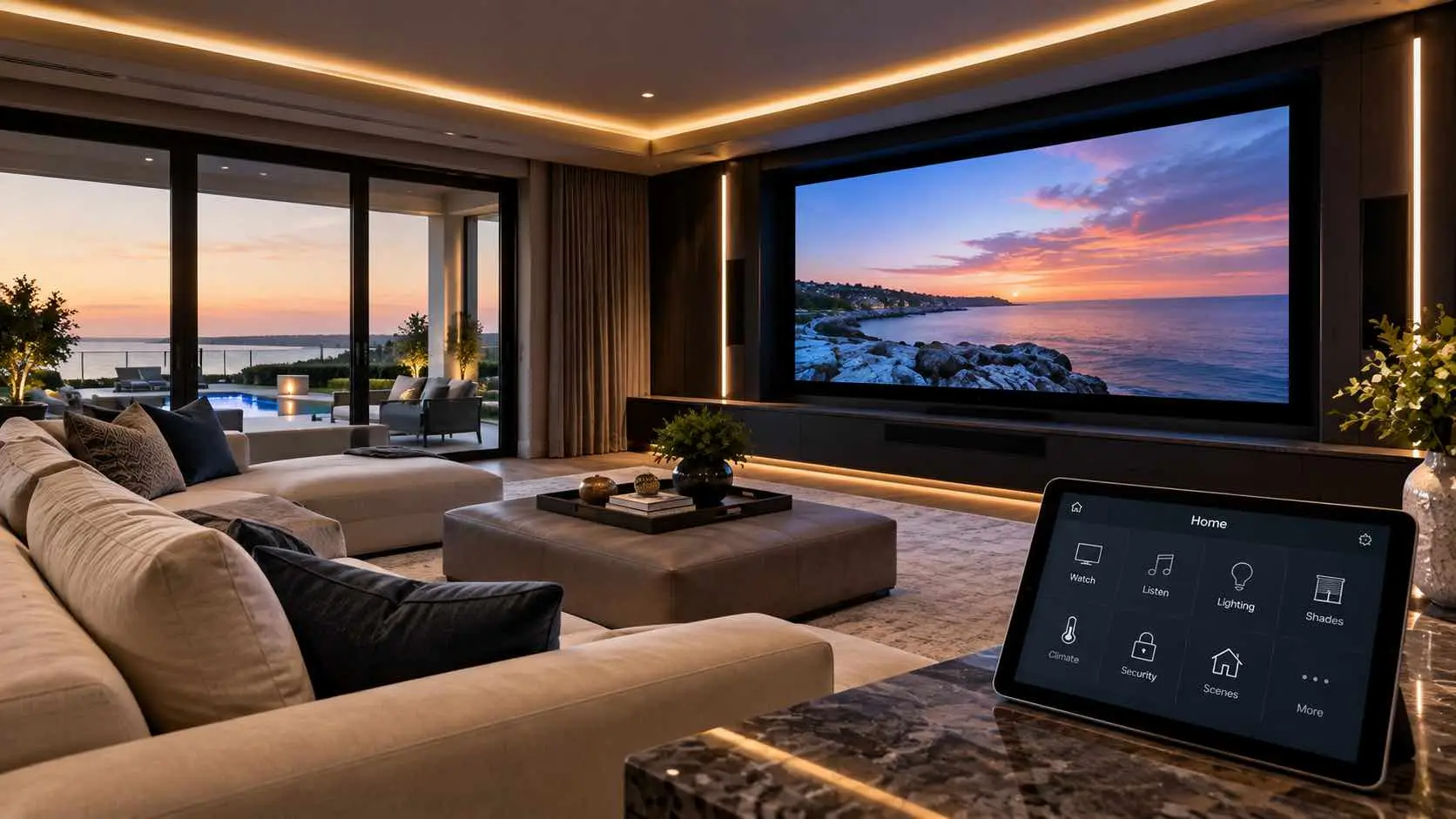
Entertainment technology should be considered before the interior is finished.
Speaker locations, television positions, equipment storage, network connections, and wiring pathways can all be incorporated into the plans.
This gives homeowners the flexibility to create whole home audio, media rooms, home theaters, and entertainment areas without unnecessarily exposing wiring or equipment.
Don’t Forget Outdoor Technology
For a luxury Sea Bright home, technology planning should extend beyond the interior.
Decks, patios, pools, rooftop areas, and other outdoor spaces may eventually incorporate audio, televisions, WiFi, lighting, security cameras, or other technology.
Planning connectivity and infrastructure for these spaces during construction can provide significantly more flexibility later.
Centralize Your Technology Equipment
A luxury home can accumulate a surprising amount of technology equipment.
Networking hardware, automation components, audio distribution, security equipment, and other systems need appropriate locations.
Rather than placing equipment throughout closets and living spaces, a centralized technology area can help keep components organized and accessible.
Proper consideration should also be given to ventilation, power, equipment capacity, and room for future expansion.
Leave Room for Growth
One of the simplest future-proofing strategies is avoiding an infrastructure design that is already at capacity when you move in.
Network switches, equipment racks, wiring pathways, electrical requirements, and other components should be planned with potential growth in mind.
The objective is not to install equipment you do not need. It is to avoid designing a system where adding the next technology requires rebuilding what is already there.
Make the Technology Easy to Upgrade
Future technology changes are inevitable.
The goal should be to make replacing or adding equipment as straightforward as practical.
Accessible equipment locations, organized wiring, documented infrastructure, and a professionally designed network can all make future upgrades easier.
Technology should be able to evolve without unnecessarily disturbing the architecture and finishes of your Sea Bright home.
Coordinate With Your Builder, Architect and Designer
Technology planning should be part of the construction process rather than an isolated project.
A home automation consultant can collaborate with your builder, architect, electrician, interior designer, lighting designer, and other professionals involved in the home.
This coordination can help determine equipment locations, wiring requirements, speaker placement, keypad locations, shade requirements, network access points, and other technology details before they conflict with finished design elements.
For a luxury build, this collaborative approach is especially important because technology should complement the architecture rather than compete with it.
Plan for Remote Home Management
If your Sea Bright property will be used as a second or seasonal home, remote management should also be considered during the design process.
An integrated system can provide access to lighting, climate, security cameras, access control, and other connected systems while you are away.
Automation scenes can also make arriving and leaving easier.
An Arrival scene can begin preparing the property before you get there, while an Away scene can transition multiple systems into their preferred unoccupied settings when you leave.
Build a Home That Can Evolve With You
Nobody can know exactly what home technology will look like a decade from now.
That is why future proofing is less about predicting the future and more about creating flexibility.
A strong network, thoughtful wiring, accessible equipment, room for expansion, and a scalable automation platform provide a foundation that can evolve as your lifestyle and technology change.
You may not need every feature when you first move into your Sea Bright home. The important thing is making sure you have not unnecessarily limited your options for what comes next.
Future Proof Your Sea Bright Home With GMI Automation
The best time to plan the technology for a new luxury home is before construction is complete.
GMI Automation works with homeowners, builders, architects, designers, electricians, and contractors to plan integrated technology for luxury new construction in Sea Bright, throughout Monmouth County, and across New Jersey.
From enterprise grade networking and enhanced WiFi to whole house lighting control, audio and video, home theaters, motorized shades, security, outdoor entertainment, and complete home automation, GMI Automation can help create a technology foundation designed to grow with your home.
If you are planning a luxury home build in Sea Bright, NJ, involve GMI Automation early in the process to create a scalable home automation plan that meets your needs today while providing flexibility for tomorrow.