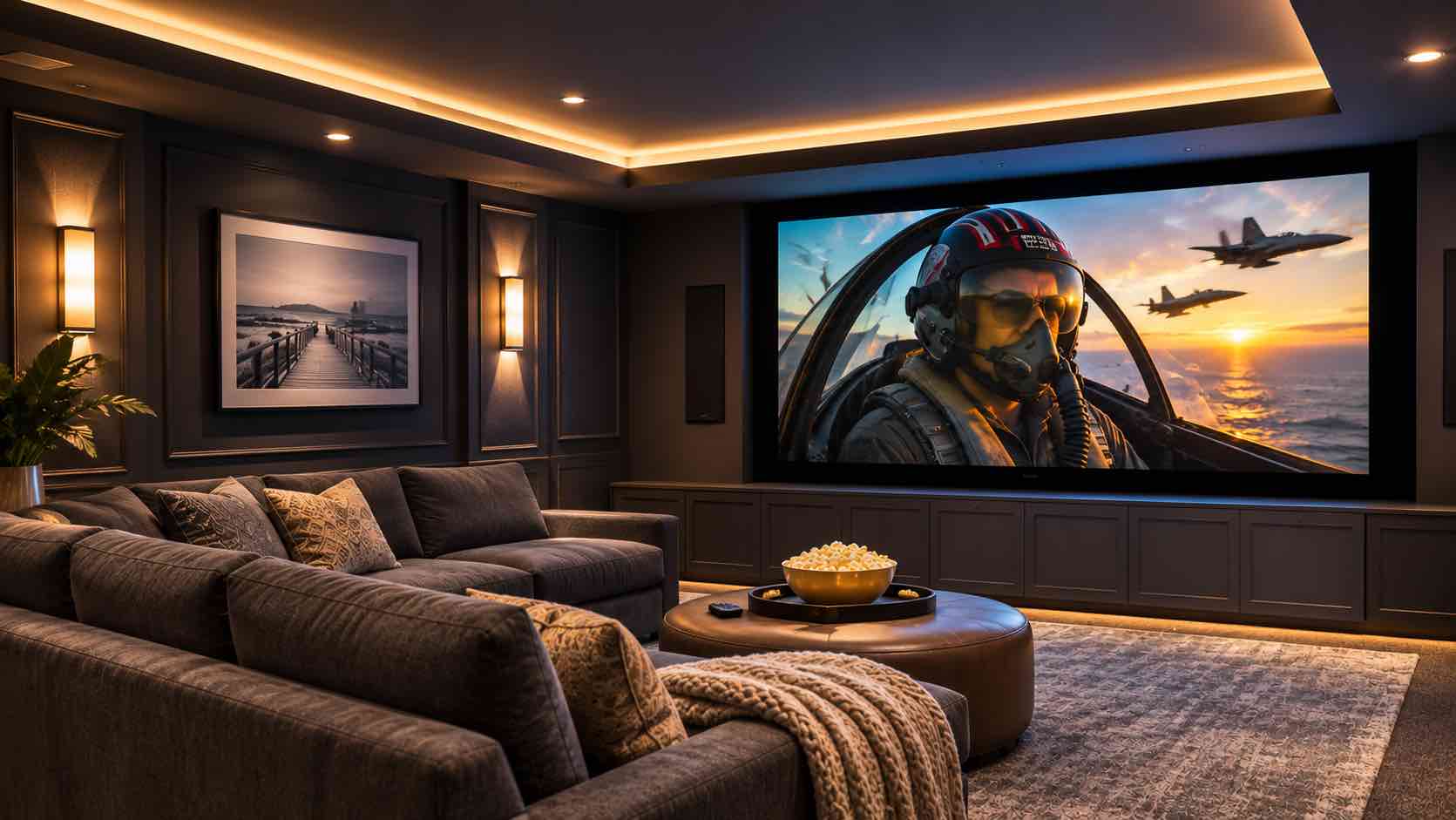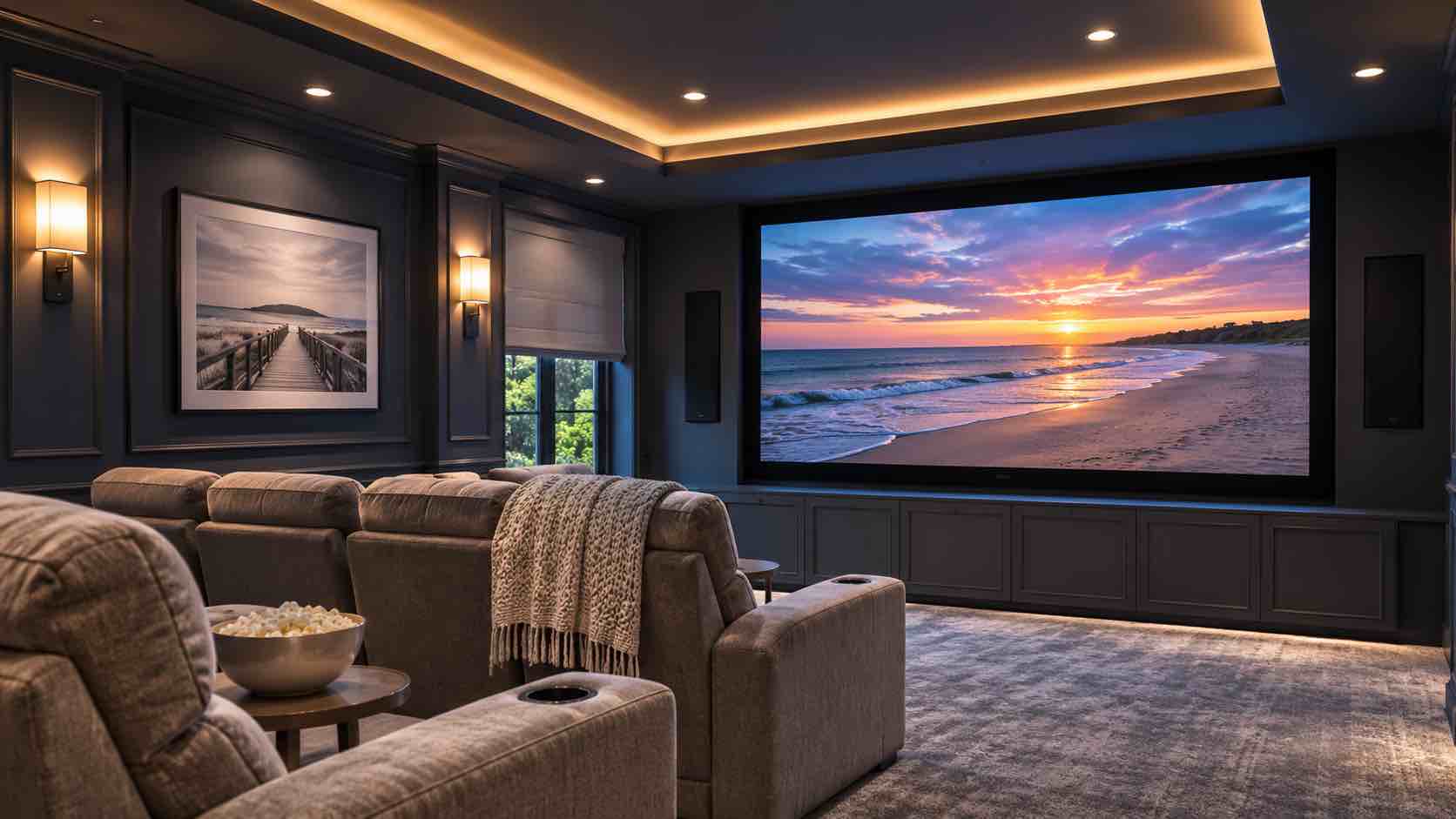
A finished basement offers an excellent opportunity to create a dedicated entertainment space without expanding your home’s footprint. For homeowners in Wall Township, NJ, transforming an existing basement into a luxury home theater can provide a comfortable, immersive environment for watching movies, sporting events, streaming entertainment, and spending time with family and friends.
With the right combination of high-performance audio, video, lighting, and integrated controls, a finished basement can become one of the most enjoyable spaces in your home.
At GMI Automation, we design and install custom home theater systems for homeowners throughout Wall Township and Monmouth County, helping transform existing spaces into sophisticated entertainment environments.
Why a Finished Basement Is Ideal for a Custom Home Theater
Finished basements often provide several advantages when designing a dedicated home theater. Unlike open living rooms or family spaces, basements typically offer greater control over lighting, sound, and room layout.
For homeowners in Wall Township, converting a finished basement can be an attractive alternative to building an addition or undertaking a major renovation.
Some advantages include:
- Reduced natural light: Fewer windows make it easier to control ambient lighting and create a cinematic viewing experience.
- Dedicated entertainment space: A basement home theater allows family members to enjoy movies and sports without taking over the main living areas.
- Flexible seating arrangements: Depending on the layout, basements can accommodate theater seating, sectional sofas, or multiple viewing areas.
- Improved sound isolation potential: Basement locations may help limit sound transmission to certain living areas, although proper acoustic design is still important.
- Room for integrated technology: Existing finished spaces can often accommodate custom audio, video, and automation systems with careful planning.
The key is designing the home theater around the basement’s existing dimensions, ceiling height, and structural features.
Choosing the Right Screen for Your Basement Home Theater
One of the first decisions when converting a finished basement into a luxury home theater is selecting the appropriate video system.
Depending on the size and layout of the room, homeowners may choose a large-format television or a projection system with a dedicated screen.
A projector can provide a cinematic experience, particularly in basements where natural light is limited. However, ceiling height, throw distance, seating arrangements, and room dimensions must be evaluated before selecting equipment.
Large-screen televisions can also deliver exceptional picture quality and may be better suited for multipurpose entertainment rooms where homeowners frequently watch sports, television, and streaming content.
GMI Automation helps Wall Township homeowners select video systems that complement their room dimensions and viewing preferences.
Designing an Immersive Surround Sound System
A luxury home theater is about more than a large screen. High-quality audio plays an equally important role in creating an immersive entertainment experience.
A professionally designed surround sound system allows viewers to experience dialogue, music, and sound effects with greater clarity and realism.
For finished basement home theaters, audio design should consider:
- Speaker placement relative to seating positions
- In-wall and in-ceiling speaker options
- Subwoofer positioning and bass management
- Ceiling height and room dimensions
- Sound reflections from walls, flooring, and furnishings
- Acoustic treatments and sound isolation
Basements can present unique acoustic challenges, particularly when rooms have low ceilings, hard surfaces, or irregular layouts.
Professional speaker placement and system calibration help create balanced audio throughout the viewing area.
Smart Lighting Control for the Perfect Viewing Experience
Lighting is an important component of any custom home theater, especially in a basement where artificial lighting may be the primary source of illumination.
Smart lighting control allows homeowners to adjust the atmosphere for different activities without manually operating multiple switches.
For example, a customized movie scene can dim overhead lighting, activate subtle accent lights, and prepare the room for viewing.
Lighting can also be programmed for sporting events, casual television watching, or entertaining guests.
Popular home theater lighting options include recessed ceiling lights, wall sconces, LED accent lighting, and illuminated pathways.
By integrating lighting with the home theater system, GMI Automation can create a convenient entertainment environment controlled through a single interface.
Creating Comfortable Seating and an Effective Room Layout
A successful home theater design balances technology with comfort.
Whether your Wall Township basement has a large open floor plan or a smaller enclosed room, seating placement should be considered early in the design process.
Viewing distance, screen height, speaker placement, and walking paths all influence the final layout.
Some homeowners prefer traditional reclining theater seats, while others choose oversized sectional sofas that create a more relaxed family entertainment space.
For larger basements, multiple seating rows may be possible, although ceiling height and sightlines must be carefully evaluated.
The objective is to create a space where everyone can comfortably enjoy the entertainment experience.
Integrating Home Theater Technology Without Clutter
Many homeowners want a luxury home theater without visible wires, bulky equipment, or complicated controls.
Modern home theater systems can incorporate concealed speakers, organized equipment racks, discreet wiring, and streamlined control interfaces.
When converting an existing finished basement, careful planning is particularly important because walls and ceilings may already be completed.
GMI Automation evaluates the available infrastructure and identifies installation options that minimize disruption while delivering the desired performance.
Depending on the basement layout, equipment may be located in a nearby utility room, closet, or dedicated cabinet to keep the entertainment area clean and organized.
Simplifying Your Home Theater with One-Touch Automation
A luxury home theater should be easy to operate.
Rather than managing separate remotes for your television or projector, audio system, streaming devices, and lighting, an integrated automation system can bring everything together.
With professionally designed controls, homeowners can activate their preferred entertainment settings with a single command.
For example, selecting a movie scene could turn on the video system, activate surround sound, and adjust the lighting.
A sports viewing scene might provide brighter ambient lighting while maintaining optimal audio and video settings.
This level of integration makes the home theater more convenient for everyday use and entertaining guests.
Important Considerations Before Converting Your Basement
Before beginning a finished basement home theater project in Wall Township, several practical considerations should be evaluated.
Ceiling Height: Basements with lower ceilings may require careful screen positioning, speaker selection, and lighting placement.
Moisture and Humidity: Any existing moisture or water intrusion issues should be addressed before installing sensitive electronic equipment. This is especially important in basement environments.
Electrical Infrastructure: High-performance audio and video equipment may require additional electrical planning.
Home Networking: A reliable wired or wireless network supports streaming services, connected devices, and integrated automation.
Ventilation: Equipment racks, projectors, and other electronics require appropriate airflow to maintain reliable operation.
Sound Isolation: Acoustic treatments and construction improvements can help reduce sound transmission to other areas of the home.
Addressing these considerations early helps create a home theater that performs reliably and remains comfortable for years to come.
Custom Basement Home Theater Design in Wall Township, NJ
Whether you live in Wall Township, West Belmar, Allenwood, or another nearby Monmouth County community, converting a finished basement into a custom home theater can transform an underused space into a premium entertainment destination.
GMI Automation designs and installs custom home theater and media room systems that combine high-performance audio, video, lighting control, networking, and home automation.
Our approach focuses on creating systems that complement your home’s layout, meet your entertainment needs, and remain simple to operate.
Thinking about converting your finished basement into a luxury home theater in Wall, NJ? Contact GMI Automation to discuss custom home theater design and installation for your property.