Smart home technology has become incredibly popular in recent years. Many homeowners now own smart thermostats, video doorbells, smart speakers, or lighting apps. While these devices add convenience, they are often mistaken for a true home automation system.
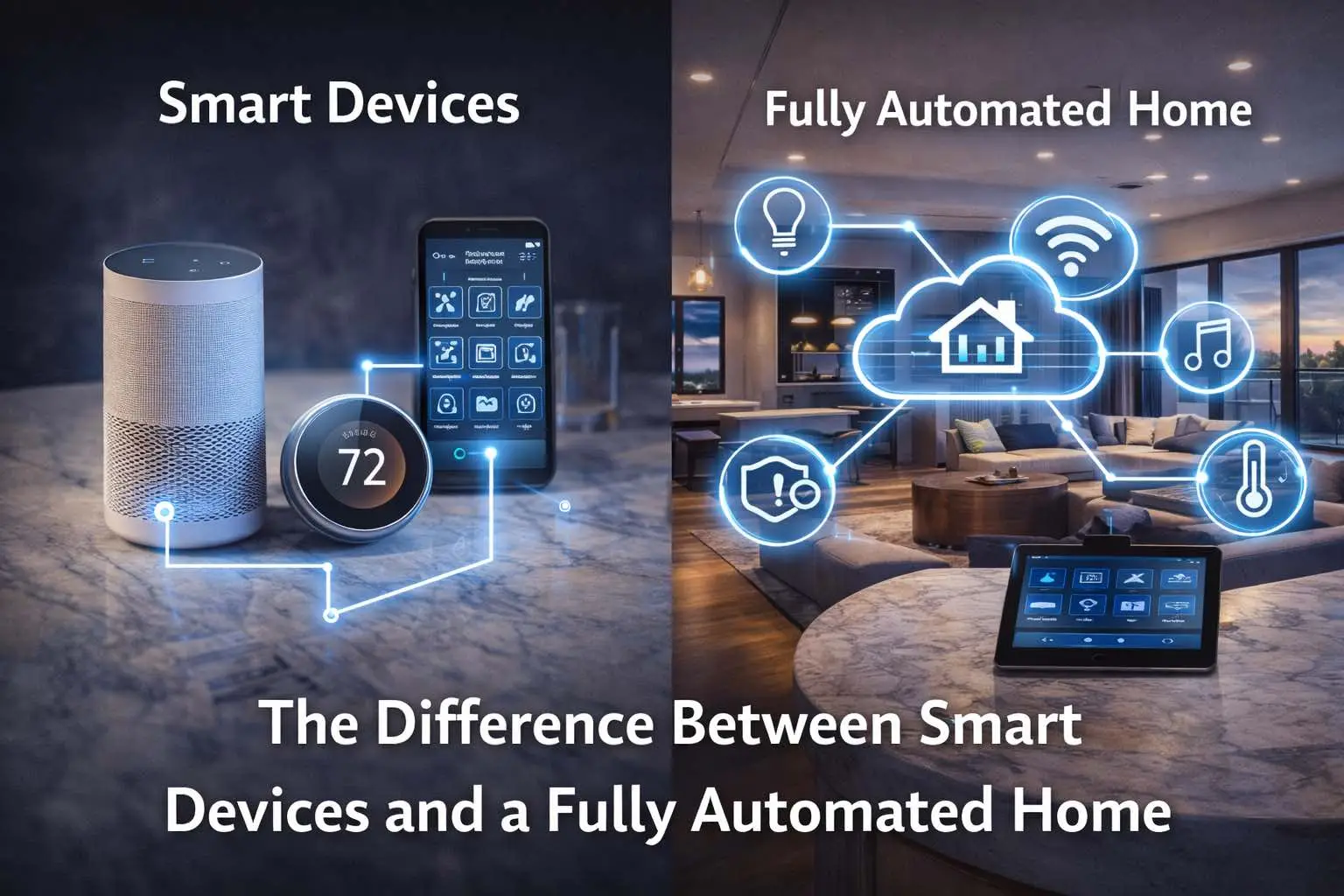
There is an important difference between a collection of smart devices and a fully automated home. Understanding that difference helps homeowners make better decisions when planning technology for their home.
What Are Smart Devices?
Smart devices are individual products that connect to your home network and can be controlled through an app or voice assistant. These products are typically designed to work independently.
Common examples include:
- Smart thermostats
- Smart plugs
- Smart lighting bulbs
- Video doorbells
- Smart speakers
- Wi-Fi security cameras
These devices offer convenience, but they usually operate in isolation. Each device may require its own app, account, and configuration.
The Limitations of Smart Devices
While smart devices can be useful, homeowners often run into limitations as they add more technology.
These can include:
- Multiple apps required to control different devices
- Inconsistent performance between brands
- Limited integration between systems
- Wi-Fi congestion as more devices are added
- Difficulty creating coordinated automation
Over time, what starts as a few helpful gadgets can become a complicated system that is difficult to manage.
What Is a Fully Automated Home?
A fully automated home is designed around a centralized control platform that integrates all systems into one unified experience. Instead of each device operating independently, everything works together.
A professionally designed automation system can connect:
- Lighting control
- Climate systems
- Motorized shades
- Whole-home audio and video
- Security and surveillance
- Door locks and access control
- Networking infrastructure
Rather than controlling individual devices, homeowners control the entire environment.
Automation vs Control
Smart devices allow you to control things. A fully automated home allows the home to respond automatically.
For example:
- Lights adjust based on time of day
- Shades respond to sunlight levels
- Climate adjusts when you leave or return home
- Security systems activate automatically at night
- Music plays in selected rooms when you enter
These actions happen seamlessly without needing multiple apps or manual adjustments.
A Single Interface Instead of Many Apps
One of the biggest advantages of a fully automated home is simplicity. Instead of managing several apps and devices, homeowners use one consistent interface.
This can include:
- Wall keypads
- Touchscreens
- Mobile apps
- Handheld remotes
Everything is controlled from a single system designed specifically for the home.
The Importance of Proper Infrastructure
A true automation system also includes the infrastructure needed to support reliable performance. This typically involves enterprise-grade networking, structured wiring, centralized equipment racks, and professional system design.
Without the right foundation, even advanced smart devices can become unreliable.
Planning automation properly ensures the system performs consistently today and remains scalable in the future.
Designing Technology Around the Home
In a fully automated home, technology is designed around how the homeowner lives. Lighting scenes can match daily routines, entertainment systems can be controlled easily, and environmental settings can adjust automatically.
Instead of technology feeling intrusive, it becomes a natural part of the home.
Creating a Smarter Living Experience
Smart devices are a great entry point into connected technology, but they only represent a small part of what modern automation can do. A fully automated home delivers simplicity, reliability, and a more refined living experience by bringing every system together under one intelligent platform.
For homeowners who want technology that works seamlessly behind the scenes, proper automation design makes all the difference.
Designing a Fully Integrated Smart Home
At GMI Automation, we specialize in designing fully integrated smart home systems that bring lighting, climate, entertainment, security, and networking together into one seamless experience. Our systems are engineered for reliability, performance, and long-term scalability.
If you’re considering home automation for a new construction project or an existing home, GMI Automation can help design a system designed to fit your lifestyle.