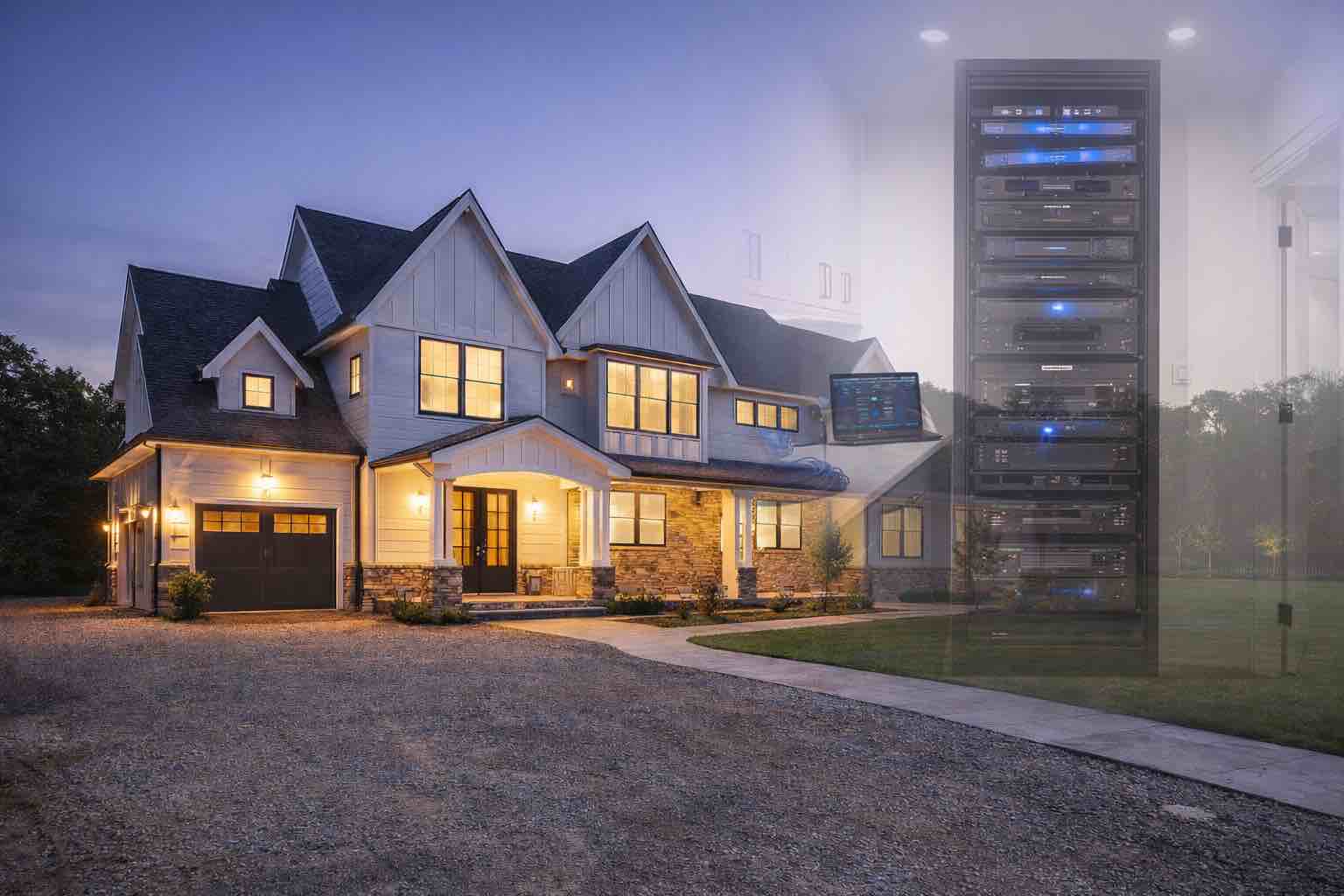
When designing a new home, most homeowners focus on finishes, layouts, and aesthetics. But one of the most important decisions for long-term performance and flexibility happens behind the scenes: planning a centralized AV rack room or closet.
A dedicated rack room is the backbone of a fully automated home. It’s where your network, audio/video equipment, control systems, and security infrastructure live, and when it’s planned during new construction, it eliminates clutter, improves reliability, and makes future upgrades dramatically easier.
What Is a Centralized AV Rack Room?
A centralized AV rack room is a dedicated space, often a closet, utility room, or mechanical room, designed to house all of your home’s low-voltage technology in one organized location.
This typically includes:
- Networking equipment and switches
- Audio and video distribution hardware
- Automation processors
- Security and camera systems
- Power management and surge protection
Instead of scattering equipment throughout the house, everything is cleanly organized, accessible, and professionally managed in one place.
Why Planing During Construction Is the Ideal
Retrofitting a rack room after a home is finished often means opening walls, rerouting wiring, and compromising performance. New construction allows everything to be done correctly from the start.
Planning early allows for:
- Proper wiring pathways from every room
- Clean, hidden cable runs
- Adequate electrical capacity
- Ventilation and heat management
- Space for future expansion
When the rack room is designed as part of the build, it becomes a long-term asset rather than an afterthought.
Choosing the Right Location
The best rack rooms are:
- Centrally located for efficient wiring
- Easily accessible for service and upgrades
- Isolated from living spaces to reduce noise
- Protected from moisture and extreme temperatures
Common locations include basements, mechanical rooms, large closets, or dedicated utility spaces. The key is planning for accessibility and airflow—not just convenience.
Power, Cooling, and Ventilation Matter
AV and networking equipment generates heat and requires stable power. One of the most common mistakes in new construction is placing equipment in a tight closet without proper ventilation.
A well-designed rack room includes:
- Dedicated electrical circuits
- Surge protection and power conditioning
- Proper airflow or active cooling
- Clearance for equipment maintenance
These considerations ensure long-term reliability and protect your investment.
The Role of Structured Wiring
A centralized rack room only works when paired with proper structured wiring. During construction, each room should be wired back to the rack location for:
- Network connections
- Audio zones
- Video distribution
- Cameras and access control
- Lighting and automation systems
This approach eliminates reliance on wireless-only solutions and gives your home a stable, scalable foundation.
Supporting Automation, Audio, and Security
A centralized rack room enables true whole-home integration. From this single location, your system can manage:
- Lighting and shade automation
- Whole-home audio and video
- Home theater systems
- Enterprise-grade networking
- Security cameras and access control
Everything works together as a unified system instead of disconnected devices spread throughout the home.
Planning for Growth and Future Technology
One of the biggest advantages of a rack room is scalability. Technology evolves, and your home should be ready to evolve with it.
A properly planned rack room allows you to:
- Add new rooms or systems easily
- Upgrade equipment without disruption
- Expand networking capacity
- Integrate future smart home technologies
This future-proofing is nearly impossible without centralized infrastructure.
Why Professional Design Matters
Not all rack rooms are created equal. Proper sizing, layout, airflow, and wiring strategy require experience and technical planning. A professional integrator ensures your rack room is:
- Sized correctly for your system
- Organized for serviceability
- Built to industry standards
- Designed for long-term performance
It’s not just about housing equipment—it’s about supporting the entire smart home ecosystem.
Build the Backbone of Your Smart Home the Right Way
A centralized AV rack room is one of the smartest investments you can make during new construction. It keeps technology out of sight, improves reliability, simplifies upgrades, and ensures your home automation system performs exactly as intended.
If you’re building a new home and want to plan a centralized AV rack room that supports today’s technology and tomorrow’s possibilities, GMI Automation can help design the infrastructure that makes it all possible.