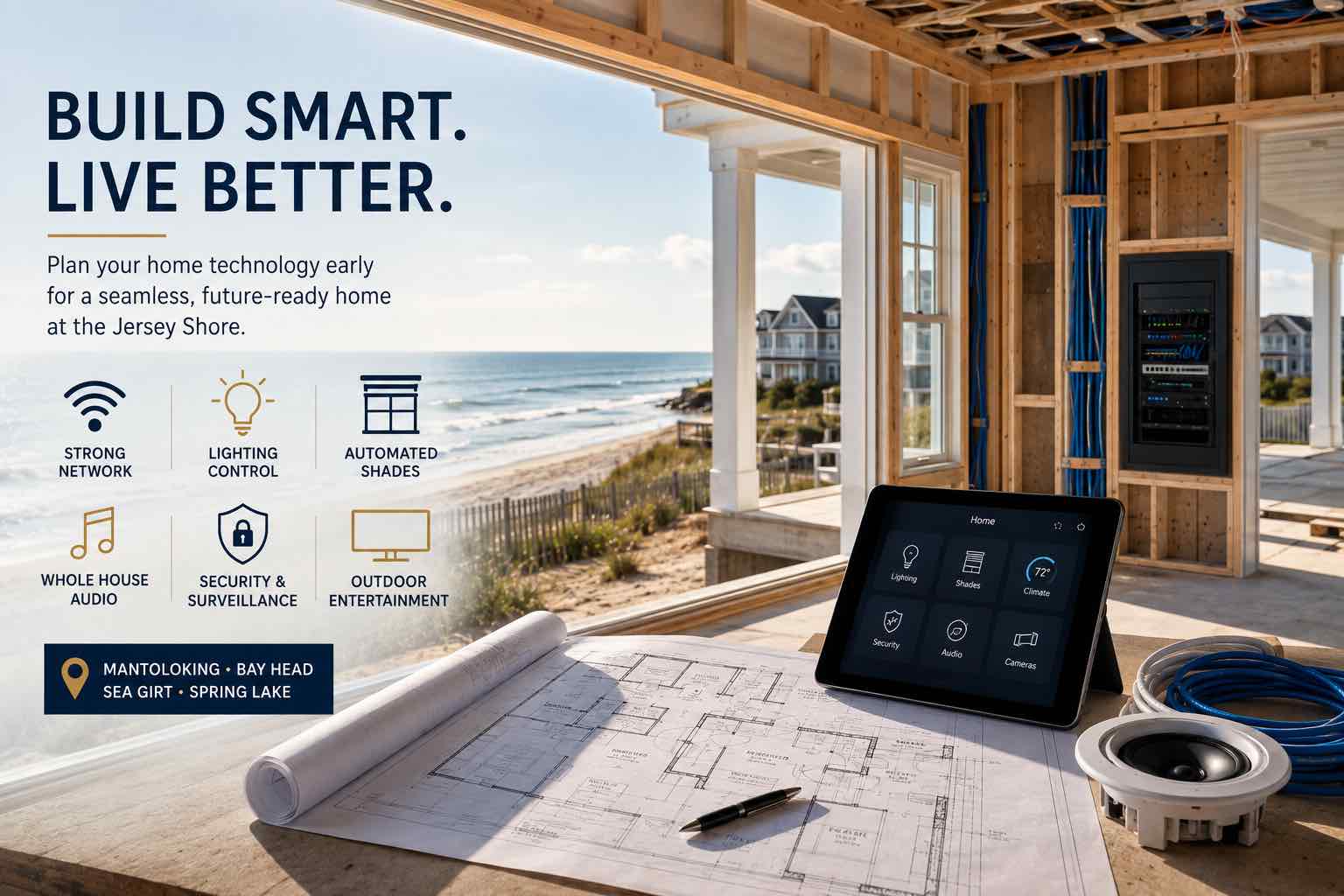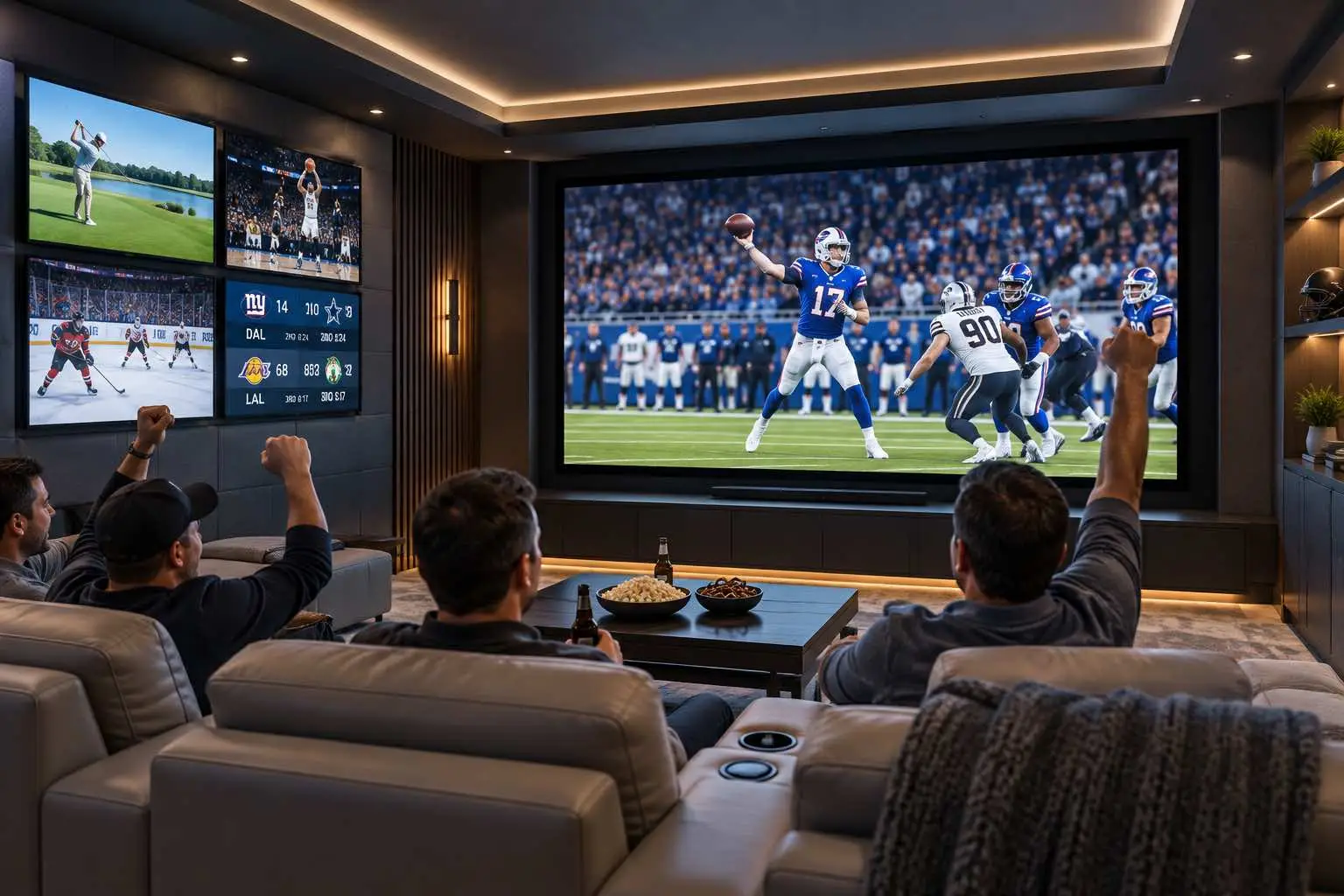
Building a new home at the Jersey Shore is an opportunity to create a property around exactly how you want to live. Whether you are building a waterfront residence in Mantoloking, a beach home in Bay Head, a luxury property in Sea Girt, or a new custom home in Spring Lake, decisions made during the design and construction process can have a major impact on how well technology works in the finished home.
Lighting control, whole house audio, home theaters, motorized shades, networking, security, outdoor entertainment, and home automation should not be treated as upgrades to consider after construction is complete. The best time to plan these systems is before walls are closed and finishes are installed.
By involving a home automation professional early, homeowners can create the infrastructure for today’s technology while also preparing their Jersey Shore home for what comes next.
Start Technology Planning During the Design Phase
Home technology should be discussed alongside electrical, lighting, HVAC, interior design, and other major systems.
Waiting until the home is nearly complete can limit your options. Wiring pathways may no longer be accessible, equipment locations may already be committed to other uses, and finished walls may make changes more complicated.
Early planning allows your automation integrator to coordinate with the architect, builder, electrician, interior designer, and other professionals involved with the project.
For new construction homes in Mantoloking, Bay Head, Sea Girt, and Spring Lake, this collaborative approach helps ensure technology becomes part of the home’s overall design rather than something added afterward.
Build a Strong Home Network From the Beginning
The network has become one of the most important systems in a modern luxury home.
Streaming, smartphones, televisions, security cameras, lighting controls, thermostats, appliances, audio systems, automation processors, and countless other devices rely on the home’s network.
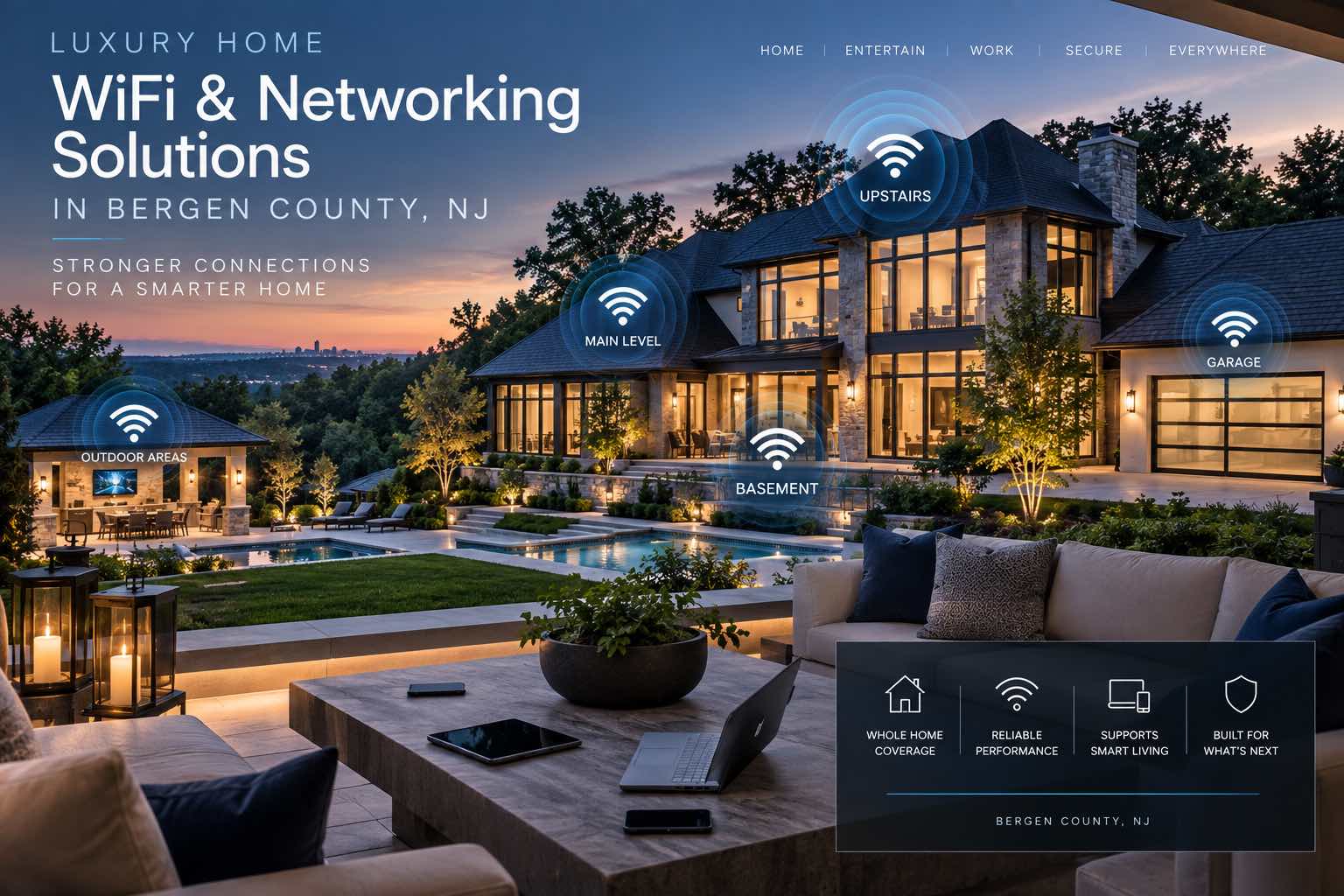
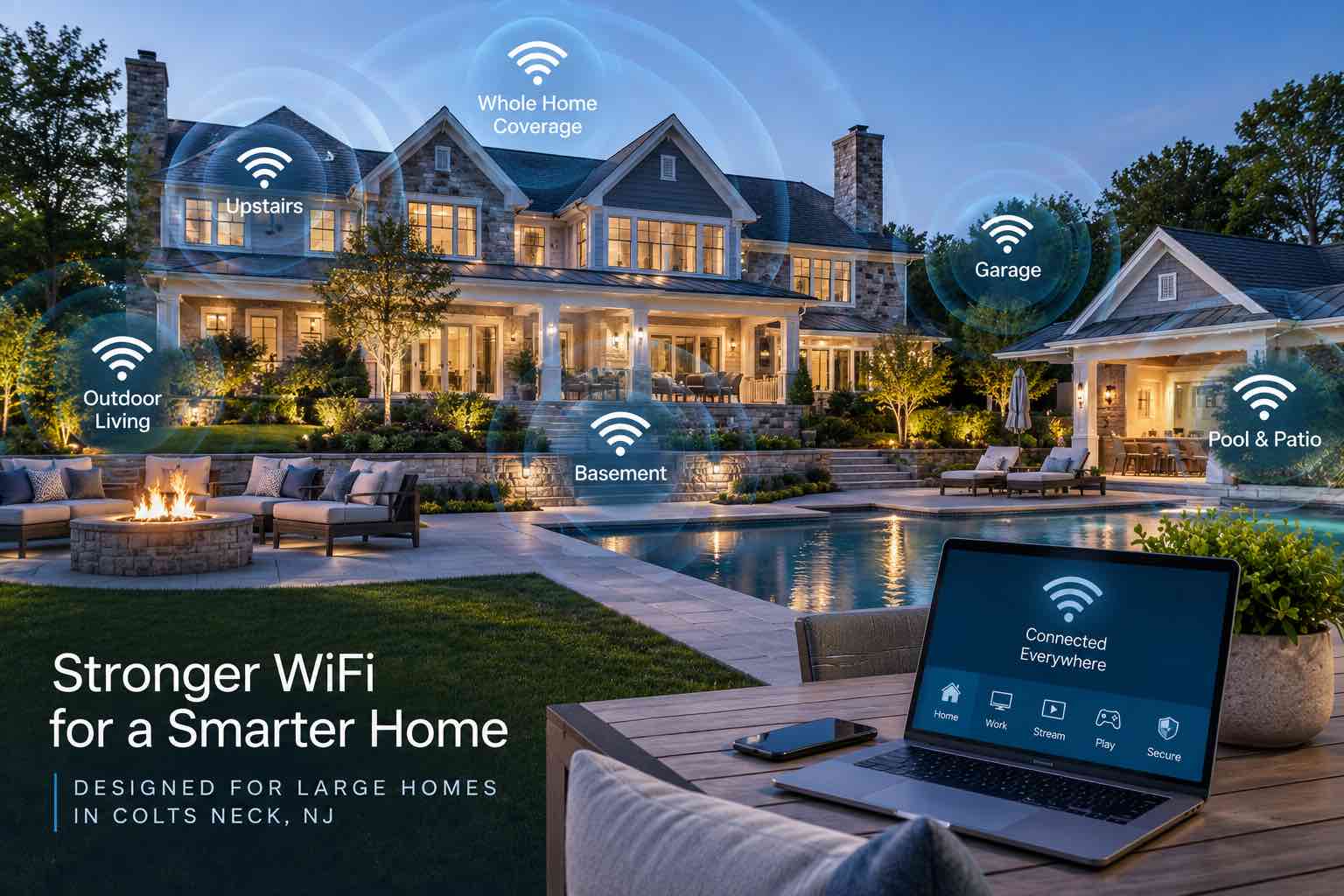
Large Jersey Shore properties can also present unique challenges. Multiple floors, extensive outdoor living areas, detached structures, pools, patios, and certain construction materials can all affect wireless coverage.
A professionally designed network can provide reliable wired and wireless connectivity throughout the home and property.
Planning network locations before construction also makes it possible to discreetly position access points and other equipment without compromising the interior design.
Prewire for Technology You May Want Later
You do not necessarily need to install every technology feature when the home is built.
You should, however, consider what you may want five or ten years from now.
Strategic prewiring can provide flexibility for future upgrades without requiring significant changes to finished spaces.
Depending on the home, planning may include wiring and infrastructure for:
- Whole house audio
- Televisions and media spaces
- Motorized shades
- Lighting control
- Security and surveillance
- Outdoor speakers and televisions
- Network access points
- Home offices
- Home theaters
- Golf simulators and recreation rooms
- Pool and outdoor living areas
- Future automation technologies
Adding infrastructure during construction is generally much easier than trying to create new wiring pathways after custom walls, ceilings, cabinetry, and finishes are complete.
Plan Whole House Lighting Control Before Electrical Work Is Finished
Lighting has an enormous influence on the appearance and atmosphere of a luxury home.
A centralized lighting control system allows homeowners to manage individual fixtures, groups of lights, or entire areas through customized scenes.
Instead of walking through the house adjusting numerous switches, one command can prepare multiple rooms for dinner, entertaining, relaxing, or bedtime.
This is particularly valuable in larger custom homes where dozens of lighting circuits may be used throughout the interior and exterior.
Planning lighting control early also allows the automation team to coordinate with the home’s electrical and lighting design. This can result in cleaner walls, more intuitive controls, and a finished system that complements the architecture.
Consider Motorized Shades During Window Planning
Large windows and expansive glass are common features in luxury Jersey Shore homes.
They showcase ocean views, bring natural light into living spaces, and create a strong connection between indoor and outdoor areas. They can also make privacy and sunlight management more challenging.
Motorized shades can be incorporated into the automation system to provide convenient control throughout the home.
Planning shades early gives the design and construction teams more options for concealing motors, wiring, pockets, and other components.
In a custom Bay Head or Mantoloking waterfront home, for example, automated shades can provide privacy when needed while allowing homeowners to quickly reveal water views throughout the property.
Design Whole House Audio Around the Architecture
Whole house audio is another feature that benefits significantly from early planning.
Speakers can be integrated into kitchens, living rooms, bedrooms, home offices, recreation areas, patios, pools, and other spaces.
When planned during construction, speaker locations can be coordinated with lighting fixtures, HVAC vents, architectural details, and furniture layouts.
For homeowners who prefer an especially clean appearance, discreet speaker solutions can help minimize the visual impact of the technology.
A new home should not look like technology was added everywhere. The goal is for the system to perform exceptionally while remaining visually integrated with the architecture.
Include Outdoor Living in Your Technology Plan
Outdoor living is a major part of owning a home at the Jersey Shore.
Homes in Sea Girt, Spring Lake, Bay Head, and Mantoloking frequently include pools, patios, outdoor kitchens, covered porches, rooftop spaces, landscape lighting, and other areas designed for entertaining.
These spaces should be considered during the initial technology planning process.
Outdoor audio, televisions, WiFi coverage, lighting, cameras, and other systems can all be incorporated into the overall design.
With centralized automation, homeowners can create an outdoor entertaining scene that adjusts lighting and prepares music or other connected systems without requiring multiple controls.
Plan for Security and Surveillance
Security planning should also happen before construction is complete.
Early involvement allows cameras, sensors, keypads, wiring, and other components to be positioned thoughtfully rather than wherever installation happens to be easiest later.
Camera placement can be coordinated with rooflines, entrances, landscaping, driveways, and exterior architecture to provide useful coverage while maintaining a clean appearance.
For second homes and seasonal residences at the Jersey Shore, remote visibility can be particularly valuable when the property is unoccupied.
Create a Central Location for Technology Equipment
High end home technology requires more than the devices homeowners see every day.
Behind the scenes are network switches, automation processors, audio equipment, video distribution components, power management equipment, and other systems.
Instead of placing equipment in cabinets and closets throughout the house, technology can be centralized in a properly designed equipment rack.
Planning this space early ensures there is sufficient room, power, ventilation, and access for both the original system and future upgrades.
A dedicated technology location also makes servicing and expanding the system significantly easier.
Make the Home Simple to Control
Adding more technology should not make a new home more complicated.
A professionally integrated automation system can bring compatible technologies together so homeowners do not have to constantly switch between separate apps and controls.
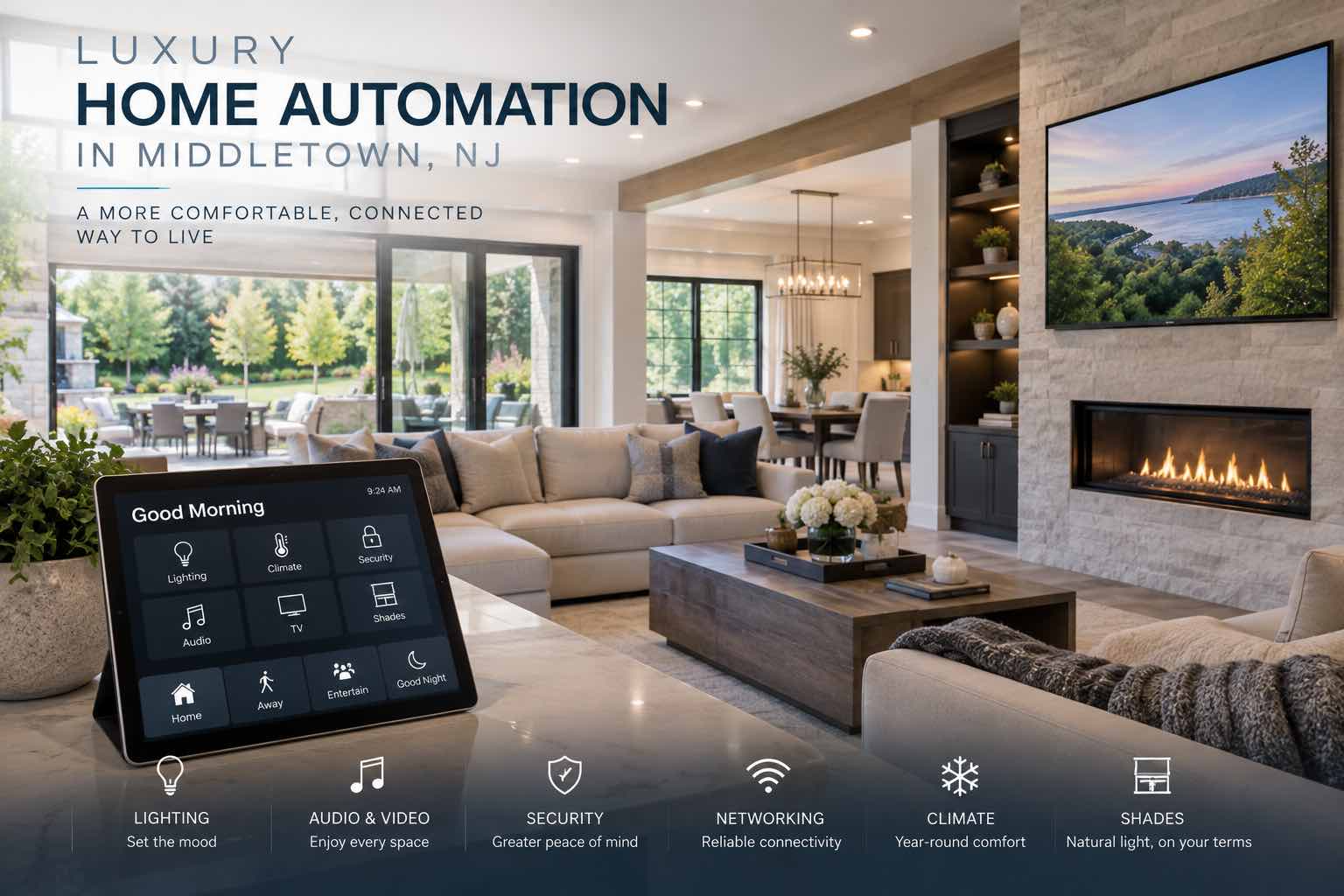
Depending on the system, lighting, shades, climate, audio, video, security, and other connected features can be accessed through wall mounted touchscreens, handheld controls, smartphones, or tablets.
Automated scenes can simplify common routines even further.
A “Goodnight” command might turn off selected lights, close shades, adjust thermostats, and prepare connected systems for the evening.
An “Away” scene can prepare the property when you leave your Shore home.
Prepare Your Jersey Shore Home for the Future
Technology changes quickly, but good infrastructure can remain useful for many years.
That is why planning should not focus exclusively on the devices being installed today. Conduit, structured wiring, network capacity, equipment space, and accessible pathways can make future technology upgrades much easier.
This is particularly important when building a high end custom home. Once premium wall coverings, millwork, ceilings, cabinetry, and other finishes are installed, homeowners understandably want to avoid disturbing them.
Planning ahead provides options.
Bring GMI Automation Into Your Project Early
The best home automation projects begin long before the homeowner moves in.
Early collaboration gives the technology integrator an opportunity to coordinate with architects, builders, electricians, interior designers, lighting designers, and other professionals involved with your new home. It also helps ensure that networking, AV, lighting control, motorized shades, entertainment, and other systems work together from the beginning.
GMI Automation designs and integrates sophisticated home automation, lighting control, audio and video, networking, motorized shades, and connected technology for luxury homes throughout the Jersey Shore and New Jersey.
If you are planning a new custom home in Mantoloking, Bay Head, Sea Girt, Spring Lake, or another Jersey Shore community, contact GMI Automation early in the design and construction process. Planning your technology before the walls are closed can help create a cleaner installation, a more intuitive home, and an infrastructure designed to support the way you live today and in the future.