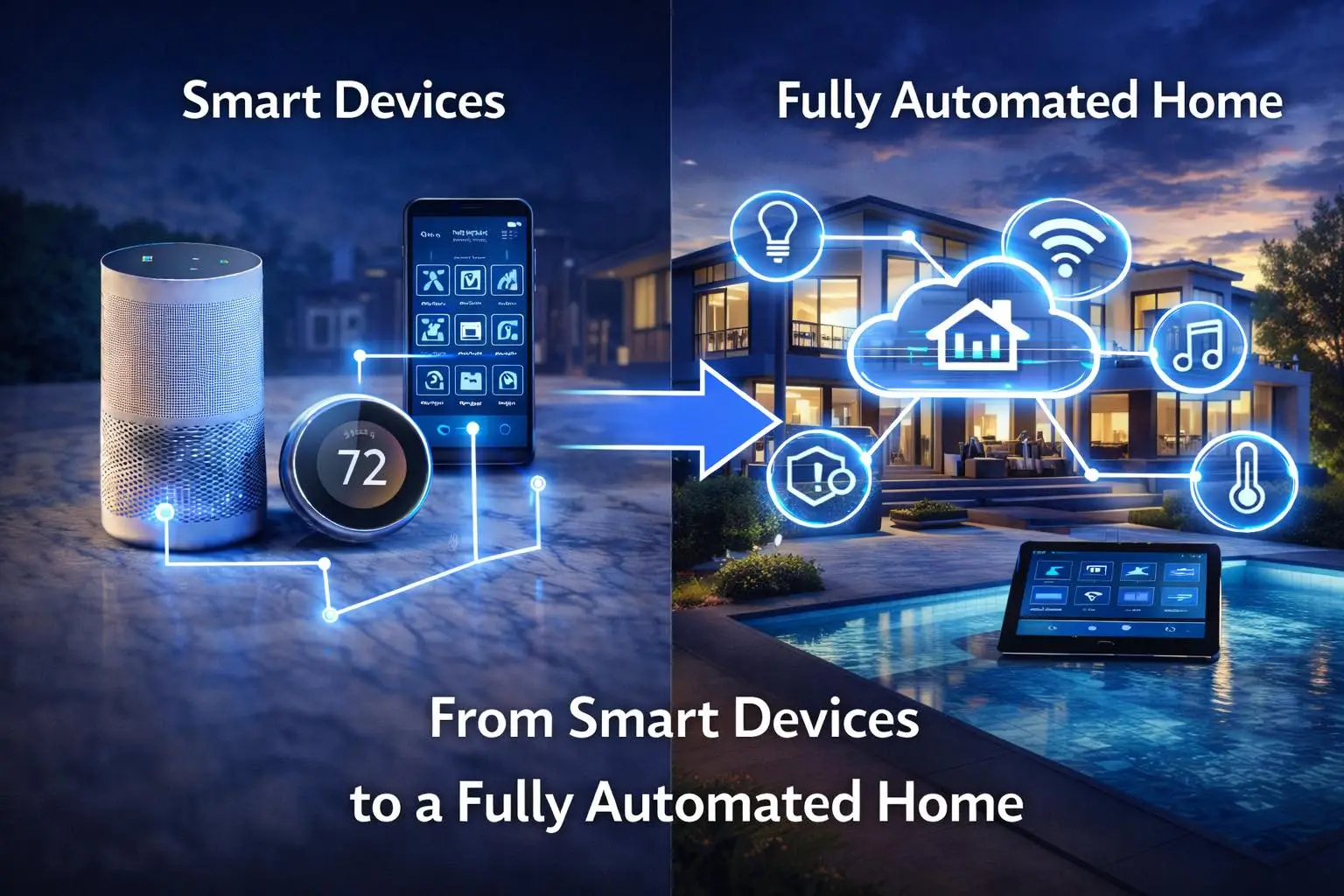
Many homeowners begin their smart home journey with individual devices. A smart thermostat, a video doorbell, a few smart light bulbs, or a voice assistant are common starting points. These products add convenience, but over time many homeowners realize their technology feels disconnected.
Multiple apps, inconsistent performance, and limited integration can make managing several smart devices frustrating. This is often when homeowners begin exploring the benefits of a fully automated home.
Transitioning from smart devices to a professionally designed automation system does not mean abandoning everything you already own. In many cases, existing technology can still be integrated into a larger system.
Understanding the Goal of Home Automation
Smart devices allow homeowners to control individual products. A fully automated home focuses on creating a coordinated environment where systems work together seamlessly.
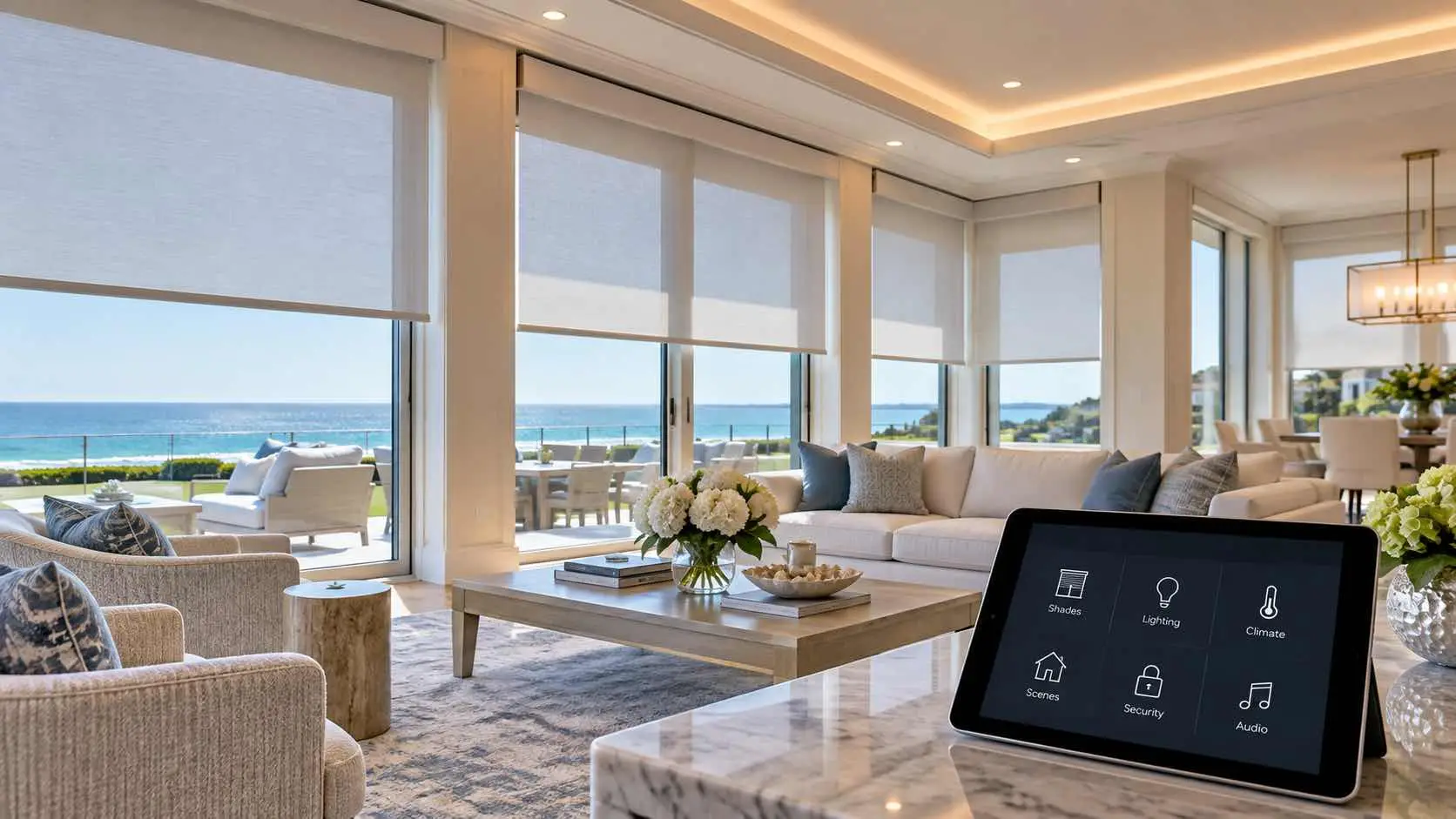
Instead of opening multiple apps for lighting, climate, entertainment, and security, everything can be managed through one interface. Even more importantly, the home can respond automatically based on schedules, occupancy, or environmental conditions.
Control vs Automation
Smart devices allow manual control of technology.
Automation allows the home to respond automatically.
Examples include:
- Lighting adjusting based on time of day
- Climate systems responding when you leave or return home
- Shades lowering when sunlight increases
- Security systems activating at night
Automation turns individual devices into an intelligent environment.
Evaluating Your Existing Smart Devices
Before moving toward full home automation, it helps to evaluate the devices you already own. Some devices may integrate into a centralized platform, while others may need to be replaced with solutions designed for long-term reliability.
Questions Homeowners Should Ask
Consider the following:
- Which devices are used most often?
- Which apps create the most frustration?
- Are multiple devices performing the same function?
- Is the current network strong enough to support additional technology?
Answering these questions helps determine the best path toward a unified system.
Strengthening the Foundation With the Right Network
One of the biggest differences between DIY smart homes and professionally designed automation systems is the network infrastructure.
A reliable automation system requires a network capable of supporting dozens or even hundreds of connected devices.
Benefits of Enterprise Grade Networking
A properly designed network provides:
- Consistent system reliability
- Faster response times for automation commands
- Strong wireless coverage throughout the home
- Greater security for connected devices
Improving the network is often the most important step in improving a smart home.
Moving Toward Centralized Control
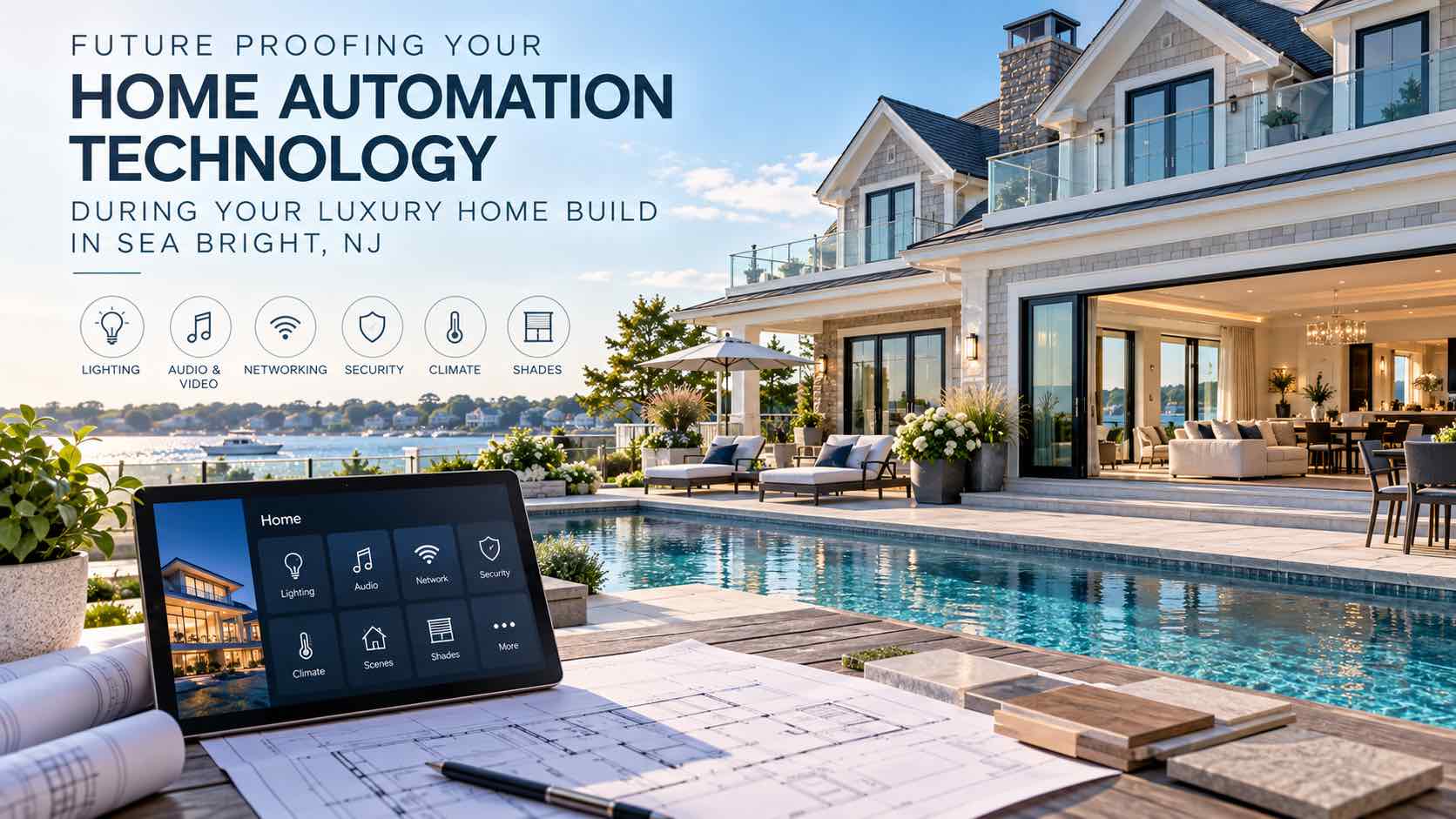
As smart devices increase, managing multiple apps becomes inconvenient. A fully automated home solves this problem by bringing control into one consistent interface.
Common Control Methods
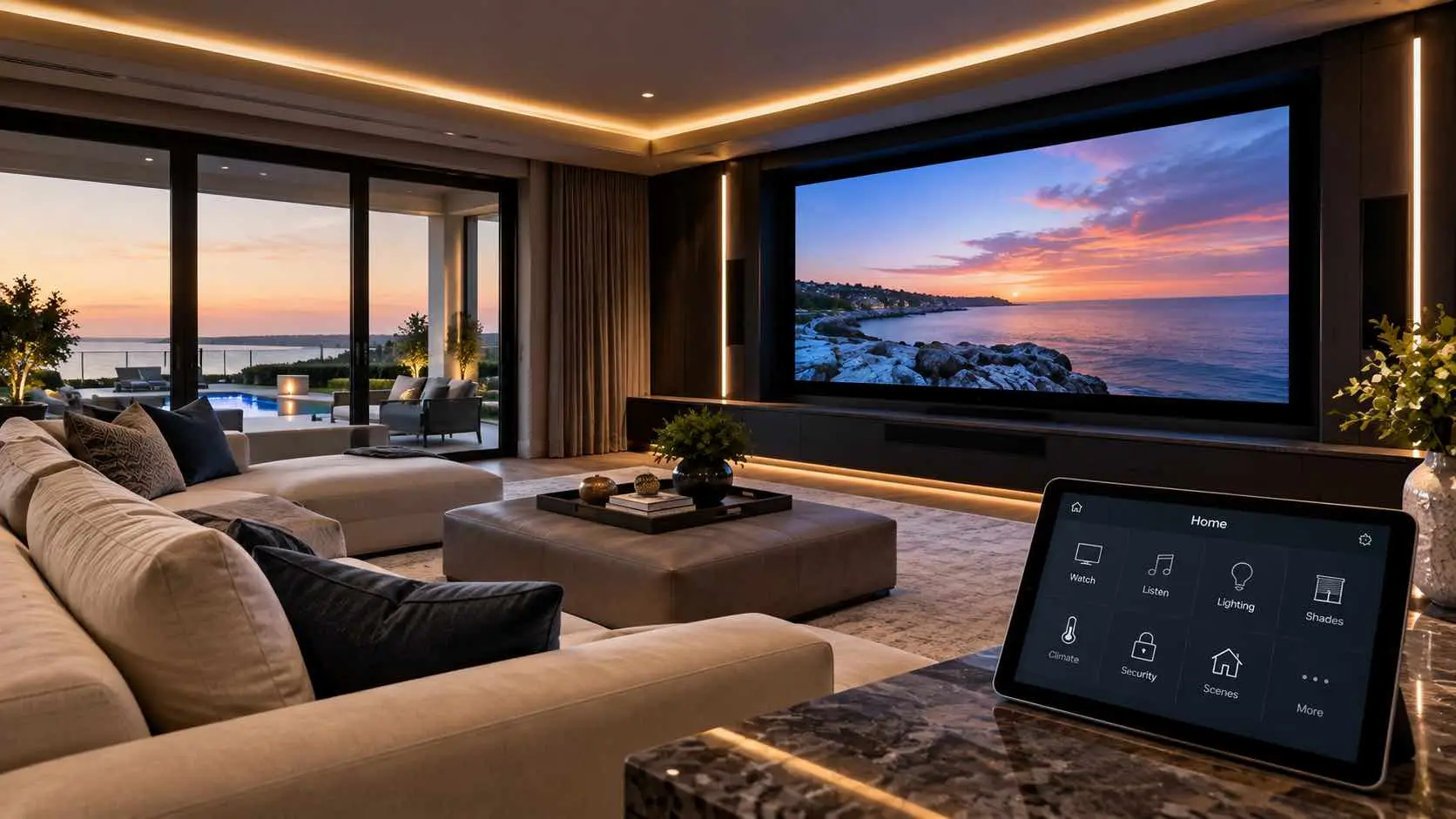
A centralized automation system may include:
- Wall-mounted keypads
- Touchscreen control panels
- Mobile apps
- Handheld remotes
- Voice control when appropriate
Instead of remembering which device uses which app, homeowners interact with one platform designed to manage the entire home.
Creating Automation Scenes and Daily Routines
Once devices are integrated into a unified platform, automation becomes far more powerful.
Lighting, climate, shades, entertainment, and security systems can work together through scenes designed around everyday activities.
Examples of Automation Scenes
Examples include:
- Morning scenes that raise shades and adjust lighting
- Away scenes that secure the home and reduce energy use
- Evening scenes that adjust lighting and activate entertainment systems
- Night scenes that lock doors and dim lighting
These scenes transform individual devices into a coordinated experience.
Planning for Long-Term Flexibility
Professional automation systems are designed to expand as technology evolves.
Infrastructure That Supports Future Growth
Important elements include:
- Structured wiring installed during construction
- Centralized equipment locations
- Automation platforms designed to expand
- Networks capable of supporting additional devices
Planning ahead ensures the home remains ready for future upgrades.
Designing Technology Around Daily Living
The best automation systems are built around how homeowners live. Lighting adapts to routines, entertainment systems are easy to access, and security operates quietly in the background.
When designed properly, technology blends into the home while improving comfort, convenience, and safety.
Start the Transition to a Fully Automated Home
Moving from individual smart devices to a fully automated home does not have to happen all at once. With proper planning and infrastructure, homeowners can evolve their systems gradually while improving reliability and ease of use.
GMI Automation designs integrated systems that bring lighting, climate, entertainment, security, and networking together into one seamless platform. Whether you are planning a new construction home or upgrading an existing property, our team can design a system built for performance and long-term reliability.